India’s Judiciary, Lawmakers & Industry Unite to Strengthen Dispute Resolution in Construction & Infrastructure
The PHD Chamber of Commerce and Industry (PHDCCI) convened a high-level Conference on Dispute Resolution & Arbitration Norms for the construction and infrastructure sectors at PHD House, New Delhi.
 City Air News
Mar 9, 2026 03:02
0
City Air News
Mar 9, 2026 03:02
0
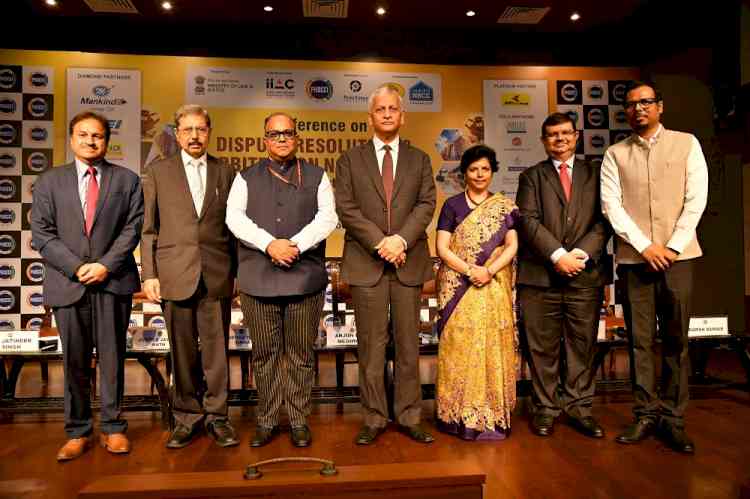
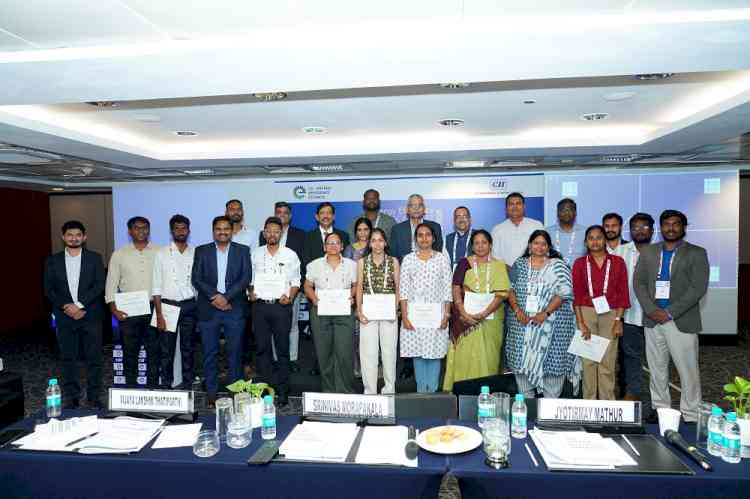
New Delhi, March 9, 2026: The PHD Chamber of Commerce and Industry (PHDCCI) convened a high-level Conference on Dispute Resolution & Arbitration Norms for the construction and infrastructure sectors at PHD House, New Delhi. Bringing together eminent members of the judiciary, senior government policymakers, legal professionals and industry leaders, the conference deliberated on strengthening India’s dispute resolution mechanisms at a time when the country is executing one of the world’s most ambitious infrastructure programmes. More than 150 delegates, including policymakers, legal practitioners, industry leaders, academics, and dispute resolution professionals, participated in the day-long deliberations.
Justice Uday Umesh Lalit, Former Chief Justice of India, sounded an urgent note on contract design, observing that in several arbitration matters, claims raised by contractors have exceeded original project costs. This is a symptom of deep inefficiencies in contract design and project management. He called for infrastructure contracts to undergo systematic scrutiny before execution to identify potential gaps and pre-empt disputes at later stages.
Justice Tejas Karia, Judge, High Court of Delhi, underlined that modern construction disputes sit at the intersection of law, engineering, finance, environmental considerations and digital transformation. He argued that effective dispute resolution must be efficient, technically informed, time-bound and commercially practical. He highlighted arbitration’s continued centrality while pointing to mediation and dispute boards as vital early-intervention tools that address disputes within the project lifecycle, preventing the accumulation of claims. Standardisation of contract templates and clearly defined dispute resolution clauses, he added, can significantly reduce the probability of disputes.
Justice Hima Kohli, Former Judge, Supreme Court of India, reframed the narrative: disputes in infrastructure projects should not be viewed as anomalies, but as structural possibilities inherent in complex commercial engagements. She argued that the strength of any infrastructure ecosystem is measured not only by engineering capability, but by the credibility and efficiency of the legal architecture governing commercial relationships.
Justice Jayant Nath, Former Judge, High Court of India, reflected on the mounting burden on civil courts and championed the expansion of alternative dispute resolution. He observed that mediation, while among the fastest and most effective methods for resolving disputes, remains significantly underutilised, a gap the conference sought to address directly.
Dr. Rajiv Mani, Secretary, Department of Legal Affairs, Ministry of Law & Justice, Government of India, articulated the Government’s vision of positioning India as a robust centre for domestic and international arbitration. He highlighted active efforts to extend arbitration and mediation facilities beyond metropolitan centres to Tier-2 cities, democratising access to effective dispute resolution. Referring to the landmark Mediation Act, 2023, he noted its role in institutionalising mediation and fostering a culture of consensual resolution.
Dr. Manoj Kumar, Additional Secretary, Legislative Department, Ministry of Law & Justice, emphasised that effective dispute resolution frameworks build investor confidence, enabling contractors and financial institutions to participate in infrastructure development with greater certainty. He highlighted the global trend toward early-stage dispute resolution through dispute boards and institutional arbitration, affirming that strengthening India’s arbitration ecosystem will remain a strategic national priority.
Avnit Singh Arora, Director (Arbitration & Conciliation), Ministry of Law & Justice, provided clarity on recent policy advisories: the intent is not to eliminate arbitration, but to encourage mediation and conciliation as a constructive first step in appropriate cases before proceeding to arbitration. He urged stakeholders to read circulars holistically, as part of a complementary, not competing, architecture for dispute resolution.
Adarsh Kumar, Co-Chair, Infrastructure, Roads & Highways Committee, PHDCCI, made a compelling case for a paradigm shift in approach. He argued that negotiation, mediation, dispute boards, adjudication and arbitration must not be treated as competing options, but as complementary stages in a structured problem-solving chain, a model that is layered, practical and commercially intelligent.
Dr. Jatinder Singh, Deputy Secretary General, PHDCCI, affirmed that India stands at a decisive moment in its economic and infrastructure journey. He reinforced that the full suite of resolution mechanisms must be viewed as a cohesive, complementary system, one that ensures commercial certainty and sustains the momentum of India’s infrastructure growth.
The conference was supported by the Ministry of Law & Justice, Government of India. The India Infrastructure Arbitration Centre served as Institutional Partner; ProUltimus as Knowledge Partner; and GAIL and NBCC as Conference Partners.