India's Growth Story in Space Technology is Facilitating National Development: ISRO Scientist Prof. Amitabh Singh
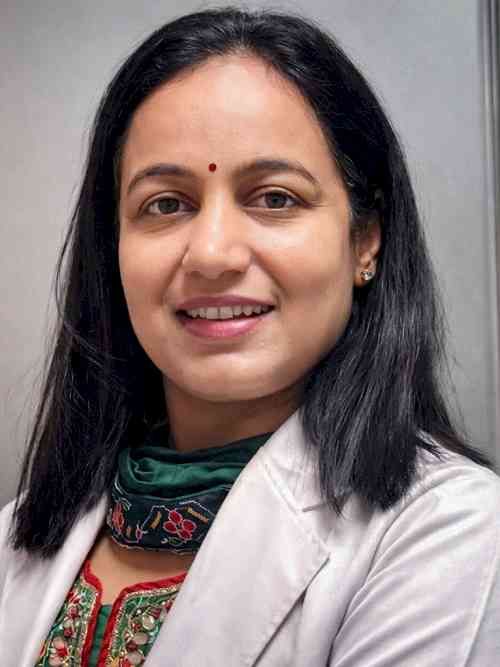
Prof. Amitabh Singh, a senior scientist at the Indian Space Research Organisation (ISRO) associated with the Venus Orbiter Mission, said that India is steadily achieving new milestones in space science and space technology.
 Girish Saini
Aug 3, 2026 07:48
0
Girish Saini
Aug 3, 2026 07:48
0
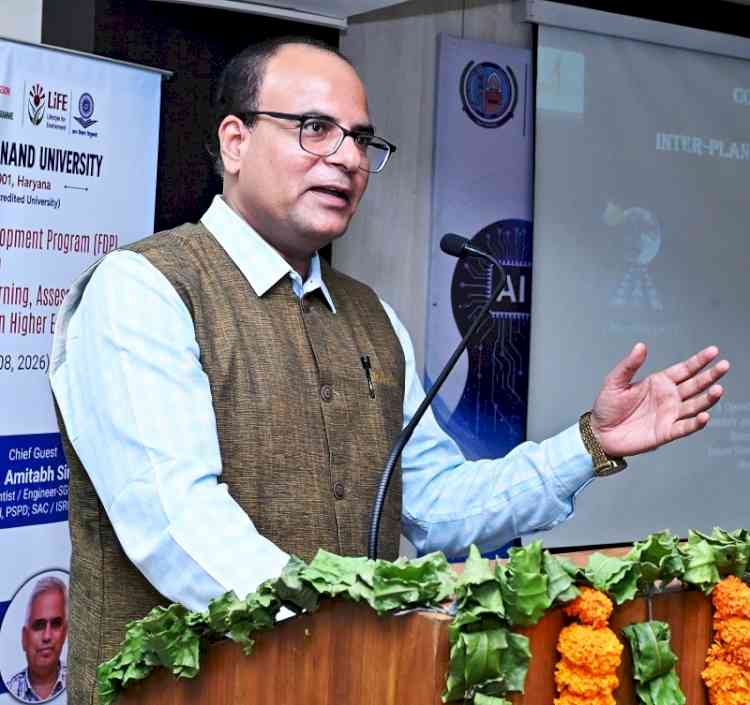
Rohtak, August 3, 2026: Prof. Amitabh Singh, a senior scientist at the Indian Space Research Organisation (ISRO) associated with the Venus Orbiter Mission, said that India is steadily achieving new milestones in space science and space technology. He noted that ISRO’s technologies are not limited to space alone but are proving valuable across agriculture, communications, weather forecasting, disaster management and every sphere of national development. He added that artificial intelligence and space technology will form a strong foundation for a technologically advanced India.
Prof. Amitabh Singh, head of ISRO’s Planetary and Space Science Data Processing Division and a senior scientist at the Venus Orbiter Mission, Space Applications Centre (ISRO), Ahmedabad, was speaking as the chief guest at the opening session of a faculty development programme (FDP) on “AI Enabled Teaching, Learning, Assessment and Academic Research” held today at Maharshi Dayanand University, Rohtak (MDU).
Referring to the achievements of the Chandrayaan missions, Prof. Singh provided detailed information on launch vehicles and the role of weather, communication and navigation satellites. In a lecture titled “Computer Vision for Interplanetary Missions in ISRO,” he explained that modern computer-vision techniques play a crucial role in solving technical challenges and ensuring mission success. He also shared updates on preparations for Chandrayaan 4, Chandrayaan 5 and the proposed Venus mission.
Presiding over the inaugural session, MDU Vice Chancellor Prof. Milap Punia said that Indian scientists’ accomplishments have given the country global recognition in space science. He observed that through high quality education, research and innovation, India is rapidly moving toward technological self-reliance. He noted vast startup opportunities for students and researchers in space technology and AI, urged youth to adopt new technologies and pursue innovation, and cited the Indian space startup “Skyroot” as an example.
During the programme, ISRO scientist Prof. Amitabh Singh and Vice Chancellor Prof. Milap Punia engaged in a wide-ranging dialogue on topics related to space technology and AI. Students from the University Campus School, MDU research scholars and faculty posed questions, which both experts answered in detail.
Prof. Munish Garg, director of MMTTC, welcomed the guests. Prof. Naseeb Singh Gill, Dean of the Faculty of Mathematical and Computational Sciences, highlighted the growing utility of AI in education and research. The session was compered by Dr. Pooja Mittal, and a vote of thanks was delivered by Dr. Madhuri Hooda, Deputy Director, MMTTC.
The FDP was organized jointly by UGC-MMTTC(MDU), Department of Computer Science and Applications and DAV Centenary College, Faridabad. Attendees included Prof. Jitendra Kumar (Dean, Faculty of Education), Prof. Pramod Kumar (Head, Department of Geography), Prof. Preeti Gulia (Head, Department of Computer Science), Prof. Yudhveer Singh (Director, UCC), along with faculty members, research scholars and students from MDU, DAV College Faridabad and University Campus School.