India Must Transition from a Consumer to a Creator of Technology: Dr. Jitendra Singh says at PHDCCI’s 121st Annual Session
“Minister underscores public–private synergy, indigenous manufacturing and accelerated innovation across quantum technology, nuclear science, biotechnology, space and pharmaceuticals”
 City Air News
Oct 10, 2026 04:25
0
City Air News
Oct 10, 2026 04:25
0
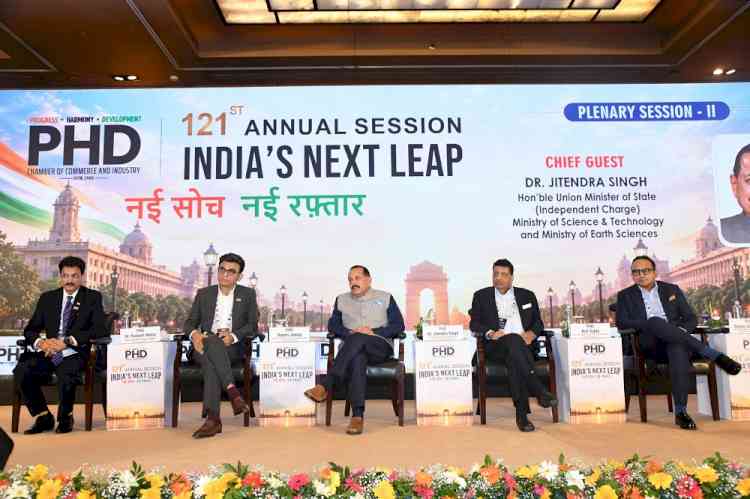
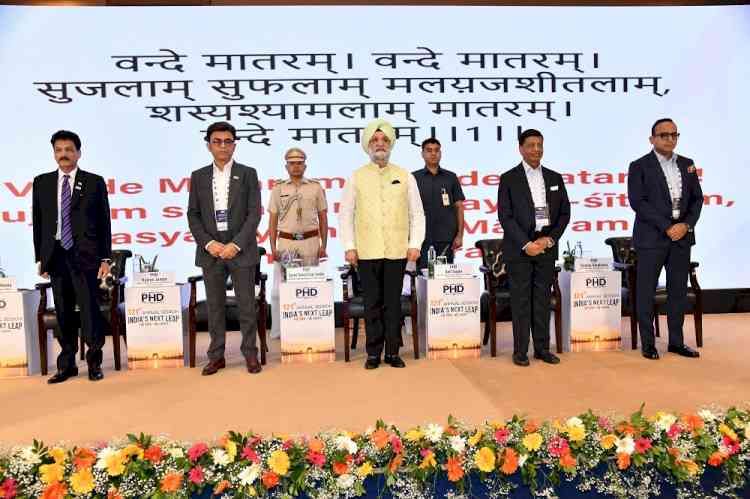
New Delhi, October 10, 2026: Dr. Jitendra Singh, Union Minister of State (Independent Charge) for Science & Technology and Earth Sciences, Government of India, addressed the 121st Annual Session of the PHD Chamber of Commerce and Industry (PHDCCI) in New Delhi, highlighting that this moment is a celebration of PHDCCI as a century old institution and a witness to the journey of India, pre-independence to present.
Dr. Jitendra Singh emphasised that India’s highest priority must be to transform itself from a consumer of technologies developed elsewhere into a creator, developer and manufacturer of advanced technologies.
Dr. Jitendra Singh said “PHDCCI serves as an important medium to accelerate and promote government initiatives and called for strong and early entry of industry in government projects”
Highlighting the growing importance of indigenous research, innovation and industrial capabilities, the Minister underscored the need for stronger and earlier linkages between the Government, scientific institutions, startups and private industry. He stressed that India’s ambition must extend beyond operating sophisticated technologies to designing, developing, manufacturing and commercializing them domestically.
The expansion of India’s space startup ecosystem provides an important example of this transition. Government data indicate that the number of space startups increased from one in 2014 to more than 400 by February 2026. This development illustrates the potential of policy reform, institutional support and private-sector participation to build new technology-intensive industries, he said.
Dr. Singh applauded the role of PHDCCI in creating an ecosystem for collaboration between Government and Industry to create next generation technology.
He emphasized that the objective should be to build enterprises capable of creating globally competitive technologies, rather than limiting entrepreneurship to the adoption or adaptation of existing products. This requires access to research infrastructure, patient capital, testing facilities, skilled talent and predictable pathways from laboratory research to commercial deployment.
The Minister highlighted the National Quantum Mission (NQM), approved in April 2023 with an outlay of ₹6,003.65 crore over eight years, as an important example of India’s commitment to frontier technology development.
The Mission focuses on four major areas: quantum computing, quantum communication, quantum sensing and metrology, and quantum materials and devices. Four thematic hubs have been established to coordinate research, infrastructure development, entrepreneurship and industry collaboration, he said.
The progress underscores the importance of coordination between Government, research institutions and industry in translating scientific objectives into technological outcomes. The Minister’s emphasis on synergy is particularly relevant to ensuring that research advances move beyond demonstrations towards scalable, reliable and commercially deployable systems.
The expansion of private participation in nuclear-related research and nuclear medicine can create opportunities in advanced diagnostics, oncology research, medical technologies and specialised equipment. Closer collaboration between public research institutions, healthcare providers, biotechnology companies and domestic manufacturers can also support the development of indigenous products and reduce critical import dependencies.
The Minister highlighted biotechnology as another important area for technology-led economic transformation. India’s BioE3 Policy—Biotechnology for Economy, Environment and Employment—provides a framework for strengthening high-performance biomanufacturing and developing bio-based products.
The policy promotes collaboration among academia, startups, industry and research institutions across areas including bio-based chemicals, biopolymers, precision biotherapeutics, climate-resilient agriculture and other emerging applications.
India’s space programme demonstrates how sustained public investment and expanding private-sector participation can create new industrial capabilities. The growth of the space startup ecosystem, alongside the development of indigenous launch vehicles, satellite systems and space applications, reflects the potential for domestic technology creation.
Greater integration between biotechnology research, genetic research, nuclear medicine and pharmaceutical manufacturing can support the development of new diagnostic and therapeutic applications. Early participation by private companies can help identify commercial requirements, strengthen clinical and manufacturing capabilities, and accelerate the translation of research into products, he added.
Setting the context and felicitating the Guest, Rajeev Juneja, President, PHDCCI, said that Dr. Jitendra’s journey represents his commitment to science and technology. He emphasized PHDCCI’s proud 121 year old legacy with MSMEs being at its heart. He mentioned that making India a creator of technology, connecting entrepreneurship with science and technology and better public health care are the main areas where Hon’ble Dr. Jitendra's guidance has been crucial.
Sanjay Singhania, Vice President delivered the Vote of thanks. Anil Gupta, Senior Vice President and Dr Ranjeet Mehta, CEO & Secretary General, PHDCCI shared the Dais with Union Minister of State (Independent Charge), along with President and Vice President, PHDCCI.