India at forefront as traditional medicine reclaims its place in global health discourse
As traditional medicine reclaims its place in global health discourse, the country stands at the forefront of this transformation as rich wealth of traditional knowledge, powered with modern regulation, digital systems, and scientific rigour marks India out as a world leader in this area, the government said on Tuesday.
 IANS
Dec 16, 2025 01:59
0
IANS
Dec 16, 2025 01:59
0
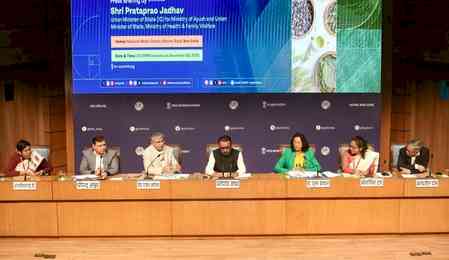
New Delhi, Dec 16 (IANS) As traditional medicine reclaims its place in global health discourse, the country stands at the forefront of this transformation as rich wealth of traditional knowledge, powered with modern regulation, digital systems, and scientific rigour marks India out as a world leader in this area, the government said on Tuesday.
The country is set to host the second ‘WHO Global Summit on Traditional Medicine’ here from December 17–19. The theme of the summit is “Restoring Balance for People and Planet: The Science and Practice of Well-Being.”
The Summit will also see the launch of the WHO Traditional Medicine Global Library (TMGL). This is the world’s most comprehensive digital repository on traditional, complementary and integrative medicine with over 1.5 million records.
There are 3,844 Ayush hospitals, 36,848 dispensaries, 886 undergraduate and 251 postgraduate colleges, and more than 7.5 lakh registered practitioners in India, according to an official document.
The upcoming summit further underscores India’s strength in shaping international discourse aimed at strengthening standards, and establishing frameworks for evidence-based traditional healthcare. This is also in alignment with the vision of Viksit Bharat at 2047, said the government.
In India, traditional medicine systems like Ayurveda, Siddha and Unani, hold profound cultural, health, and economic importance and have been deeply embedded in daily life for years.
They offer holistic, preventive and person-centred approaches to well-being.
Under the Ministry of AYUSH, systems such as Ayurveda, Yoga and Naturopathy, Unani, Siddha, Sowa-Rigpa and Homoeopathy are formally recognised within India’s public-health framework and continue to be widely practised through national institutions, service networks and community traditions.
The World Health Organisation (WHO) acknowledges traditional, complementary and integrative medicine as a significant source of primary health care, valued for its cultural relevance, accessibility and personalised nature.
With rising interest in scientifically validated traditional practices, the WHO and regional health bodies increasingly view these systems as contributors to health equity, particularly in contexts, where affordability and cultural familiarity shape healthcare choices.
The WHO organises Traditional Medicine Global Summits to promote the evidence-based integration of traditional, complementary, and integrative medicine (TCIM) into global health systems.
The first summit was held in Gujarat in 2023 in which methodologies for global research agendas were explored. WHO has also come out with its WHO Traditional Medicine Strategy 2025-2034.
India is helping steer traditional medicine towards a future where ancient knowledge and contemporary science work together to advance human well-being. In doing so, the country is not only strengthening its own health-care landscape, but also emerging as a leading voice in shaping a more holistic, inclusive, and culturally grounded global health architecture, said the government.
--IANS
na/