IAF aircraft crash: ATC must come clean on reasons behind mishap, says Defence expert Praful Bakshi (IANS Exclusive)
Defence expert Praful Bakshi on Saturday called for the accountability of the Air Traffic Control (ATC) in the initial phase of plane crash cases. According to Bakshi, the ATC's stand always comes later on during the investigation but it never issues an initial statement.
 IANS
Jun 13, 2026 08:04
0
IANS
Jun 13, 2026 08:04
0
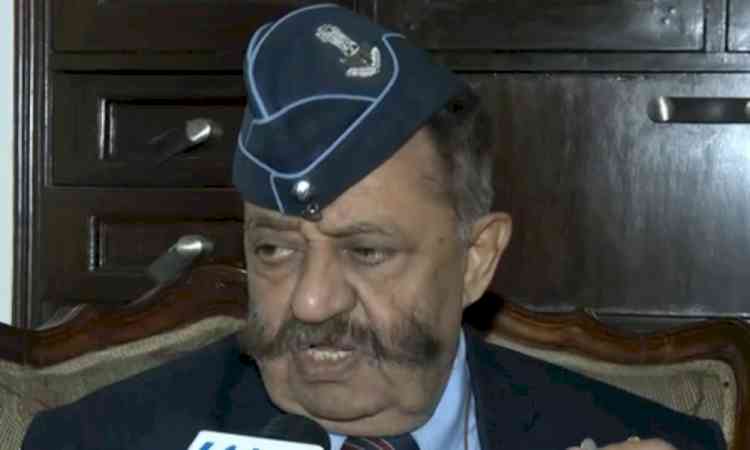
New Delhi, June 13 (IANS) Defence expert Praful Bakshi on Saturday called for the accountability of the Air Traffic Control (ATC) in the initial phase of plane crash cases. According to Bakshi, the ATC's stand always comes later on during the investigation but it never issues an initial statement.
Praful Bakshi's response came after an AN-32 transport aircraft reportedly burst into flames shortly after touchdown at the Jorhat airbase in Assam earlier on Saturday, claiming the lives of at least five Indian Air Force (IAF) personnel.
Speaking to IANS, Bakshi said: "When an aircraft crashes during landing, there can be many causes."
Using a small aircraft model to explain the accident, he referred to the Ahmedabad plane crash, saying "An AI-171 may suddenly sink due to fuel cutoff, but here the aircraft had touched down the runway. When an aircraft touches a runway, we do not know what has happened."
"Did it land and touch down very heavily due to sudden loss of power, in such a case there is a possibility that the aircraft had gone of the runway, broke up into two pieces and caught fire," Bakshi noted.
Speaking of another reason for the accident, the defence expert said: "After landing, either there was a tyre burst and the aircraft veered off the runway, though it should not have broken up into so many pieces. But we do not know whether it went into a ditch or whether there was a sudden explosion of fuel or cargo."
"We do not know what cargo it was carrying. Was it inflammable cargo or ammunition? Or fuel has caught fire. Though it has broken up very seriously," he added.
About the possible reasons behind the A-32 crash, Bakshi said that it could be heavy landing which the pilot could not control due to sudden loss of power, or it caused tyre burst, or it was bird hit which blinded the pilot and shattered the windscreen.
"But at the moment, the pilot had touched down and then crashed on the airfield," he emphasised.
The defence expert mentioned that flight data recorder and cockpit voice recorder could be used to know the exact reason.
"The former will let us know the aircraft's speed while approaching the runaway and whether it touched down heavily. The gravitational impact would have been recorded in the flight data recorder," Bakshi said.
He added that it can be known from the cockpit voice recorder if the pilot had conveyed any emergency to the ATC.
Regarding the ATC's accountability, Bakshi said: "Air Traffic Control can be asked what the last conversation with the aircraft was. I think that should be the first question put to them. There is a tendency all over the world for ATC not to speak immediately because it does not know the direction the investigation will take. They may not want to disclose everything at that stage. I mean, this is a current practice."
According to defence expert Bakshi, the ATC's statement always come later on in crash cases and never during the initial point.
--IANS
cg/khz