Historic Inauguration of Printers' Maha Panchayat: Addressing Key Challenges in India's Printing Industry
 City Air News
Feb 25, 2026 01:12
0
City Air News
Feb 25, 2026 01:12
0
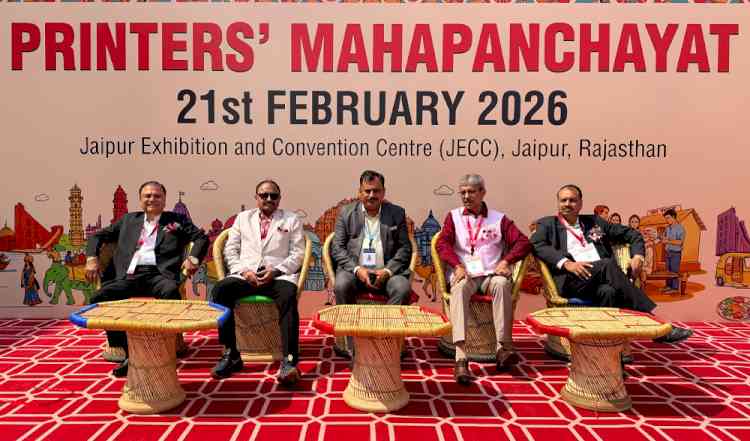
In a landmark move for India's printing and packaging sector, the first-ever Printers' Maha Panchayat was successfully convened on February 21, 2026, at the Jaipur Exhibition and Convention Centre (JECC) during the ongoing PRINTPACK Rajasthan 2026 exhibition. Organized by the Offset Printers' Association (OPA) under the aegis of the All India Federation of Printers and Packagers (AIFPP), and with robust support from the Rajasthan Offset Printers Association (ROPA) and the Indian Printing Packaging and Allied Machinery Manufacturers' Association (IPAMA), the event brought printers, entrepreneurs, industry leaders, and stakeholders from across the country to deliberate on pressing issues facing the sector. This unprecedented gathering, dubbed the "Maha Panchayat" to evoke a sense of collective decision-making akin to traditional Indian assemblies, aimed to foster unity and innovation amid rapid technological and economic shifts. Held on the opening day of PRINTPACK Rajasthan—a regional showcase featuring over 145 exhibitors and live demonstrations of cutting-edge printing technologies—the Panchayat provided a timely forum for grassroots-level discussions. Participants hailed from Rajasthan, Delhi, Punjab, Haryana, Uttar Pradesh, and beyond, highlighting the event's national significance.
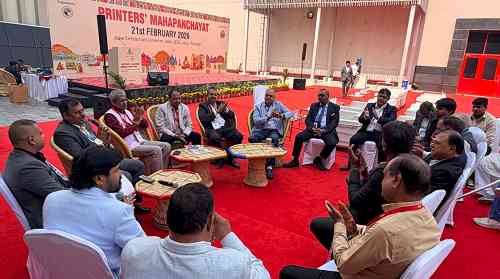
Key Discussions: Navigating Technological and Economic Turbulence
The agenda was packed with critical topics, reflecting the industry's evolving landscape. Central to the deliberations was the challenge of fast-changing technology. Panellists expressed concerns over how printers, once engaged by intermediaries, are increasingly bypassing them to connect directly with clients, leading to market disruptions. "If a printer gets work through a contact, they often approach the end-client directly, fracturing relationships and leaving small printers struggling to compete," noted a delegate from a small-scale unit in Jaipur. This issue underscored the need for ethical guidelines and collaborative networks to protect smaller players in an increasingly digitalized ecosystem.
Rising production costs and shrinking profit margins emerged as another focal point. Attendees highlighted escalating expenses in raw materials, labour, and transportation, compounded by low rates that fail to keep pace with inflation. "Our profit margins are razor-thin nowadays," shared a printer from Punjab. Discussions delved into strategies for cost optimization, including bulk procurement alliances and energy-efficient machinery adoption. Taxation woes were prominently addressed, with calls for reforms in HSN codes, GST rates, and the inverted GST structure. The inverted duty structure—where inputs are taxed higher than finished goods—has long burdened printers, leading to working capital blockages. Participants urged AIFPP and OPA to lobby the government for rationalization, emphasizing how these fiscal hurdles stifle growth in a sector vital to India's manufacturing and e-commerce boom.
The rise of digital printing machines and the introduction of AI into printing sparked animated debates. While these technologies promise efficiency and customization, many small printers lamented a lack of knowledge on best practices employed by larger firms to enhance quality and output. "We need training programs to bridge this gap," suggested an ROPA representative. Sessions explored AI's role in predictive maintenance, design automation, and waste reduction, with experts predicting a hybrid future where offset and digital coexist. Staff recruitment and skilled worker shortages were flagged as chronic problems, exacerbated by urban migration and inadequate vocational training. "Finding skilled operators for modern equipment is a nightmare," said a panellist from a mid-sized packaging firm. Recommendations included partnerships with technical institutes and apprenticeship schemes supported by the Ministry of MSME, Government of India.
On the innovation front, new developments in offset packaging and sustainable packaging solutions were hailed as growth drivers. With global demand for eco-friendly materials surging, printers discussed transitioning to biodegradable inks, recycled papers, and low-waste processes to capture markets in food, pharmaceuticals, and textiles. "Sustainable practices aren't just ethical—they're essential for business expansion," emphasized Prof. Kamal Mohan Chopra. Pricing challenges and adapting old businesses to new models rounded out the talks, with emphasis on digital transformation, e-commerce integration, and value-added services like variable data printing.
Highlights and Outcomes and Future Roadmap
Resolutions adopted included forming a task force to address GST anomalies, launching nationwide skill development webinars, and advocating for technology subsidies for MSMEs. Prof. Kamal Mohan Chopra, a key architect of the event, remarked, "This Maha Panchayat is not just a meeting—it's a movement to empower printers nationwide, ensuring we thrive in the face of change." The Printers' Maha Panchayat has set a precedent for regional dialogues, aligning with PRINTPACK Rajasthan's success in attracting 20,000 visitors and fostering business deals. Industry experts predict it will inspire similar forums in other states, bolstering India's printing sector—valued at over ₹200,000 crore and growing at 12% annually—amid global shifts toward sustainability and digitization.