Hindus should unite to avoid situation like Bangladesh in India: Dhirendra Shastri
Amid atrocities against Hindus in Bangladesh, prominent spiritual leaders on Thursday called for unity among Hindus in India, asserting that collective action was necessary to prevent a similar situation from unfolding in the country.
 IANS
Dec 25, 2025 08:12
0
IANS
Dec 25, 2025 08:12
0
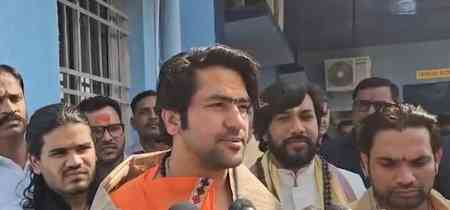
New Delhi, Dec 25 (IANS) Amid atrocities against Hindus in Bangladesh, prominent spiritual leaders on Thursday called for unity among Hindus in India, asserting that collective action was necessary to prevent a similar situation from unfolding in the country.
Speaking to reporters, spiritual leader Dhirendra Krishna Shastri said the developments in Bangladesh should serve as a warning for India.
“I want to convey a message to the people of India. If you do not want a situation like Bangladesh to arise in your country, this is the right time to act. If Hindus do not unite today, the day is not far when the roads of Chhattisgarh could witness situations similar to those in Bangladesh,” Shastri said.
Another spiritual leader, Jagadguru Rambhadracharya, echoed similar sentiments and urged people not to remain silent.
“We should no longer stay quiet. All Hindus should unite and respond strongly to these atrocities,” he said, expressing concern over the violence faced by minority communities in Bangladesh.
Meanwhile, Bangladesh has been witnessing widespread unrest following the death of prominent student activist Sharif Osman Hadi, who succumbed to his injuries in Singapore after an alleged assassination attempt in Dhaka.
Hadi’s death triggered large-scale protests across the country, with interim leader Muhammad Yunus promising justice and stating that there would be “no leniency” for those responsible. Hadi had emerged as a key figure during last year’s anti-government protests that ultimately led to the fall of Sheikh Hasina’s government.
Tensions further escalated after Dipu Chandra Das, a Hindu youth belonging to Bangladesh’s minority community, was allegedly lynched by a mob in Mymensingh over accusations of blasphemy. His body was reportedly set on fire, sparking outrage and protests by factory workers, students, and rights groups in Dhaka and several other cities.
Earlier, on December 23, a large number of people gathered outside the Bangladesh High Commission in New Delhi to protest the killing of Dipu Chandra Das and to demand protection for minorities in Bangladesh.
On December 24, Bangladesh’s Awami League alleged that deaths in jail and police custody had risen sharply under the Muhammad Yunus-led interim government, claiming that detention had become “a source of fear rather than protection.”
Meanwhile, Bangladesh Nationalist Party (BNP) acting chairman Tarique Rahman returned to Dhaka on Thursday after 17 years of self-imposed exile, amid the deepening political crisis. Rahman arrived at Hazrat Shahjalal International Airport with his wife, Zubaida Rahman, and daughter Zaima Rahman.
Since the announcement of the election schedule, Bangladesh has continued to grapple with widespread violence. Political observers have warned that Rahman’s return to the volatile political landscape could further intensify tensions across the country.
--IANS
jk/skp