Gujarat meets 68 lakh LPG demand in March despite panic surge
Gujarat met its monthly LPG requirement of 68 lakh cylinders in March despite a surge in panic bookings triggered by rumours, officials said on Monday, asserting that supplies of petrol, diesel, and cooking gas remain stable across the state.
 IANS
Apr 6, 2026 11:13
0
IANS
Apr 6, 2026 11:13
0
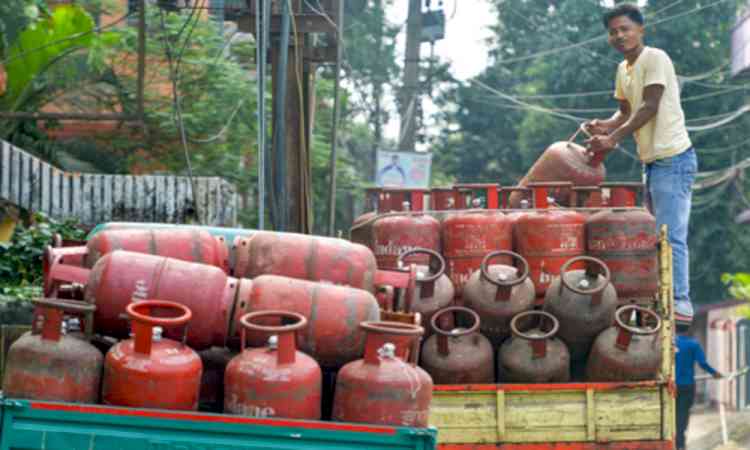
Ahmedabad, April 6 (IANS) Gujarat met its monthly LPG requirement of 68 lakh cylinders in March despite a surge in panic bookings triggered by rumours, officials said on Monday, asserting that supplies of petrol, diesel, and cooking gas remain stable across the state.
Addressing a state-level briefing, Sanjib Kumar Behera, state head and executive director of Indian Oil Corporation Ltd. (IOCL), said LPG demand rose sharply last month, with 75 lakh bookings recorded.
“There were no obstacles in delivery. The spike was due to panic booking and advance orders following rumours, but supply remained consistent with the state’s requirement,” he said.
He added that Gujarat has 1.27 crore active LPG connections, with 88 per cent of bookings and 85 per cent of delivery confirmations conducted digitally.
Oil marketing companies — Indian Oil Corporation, Bharat Petroleum Corporation Limited, and Hindustan Petroleum Corporation Limited — together operate 5,133 retail outlets in the state, all of which have adequate petrol and diesel stocks, supported by sufficient inventory at 17 supply points.
“There is no need to panic. The queues seen on March 23 and 24 were due to rumours. Sales doubled on those days and at some outlets rose four to five times above normal, but there was no actual shortage,” Behera said.
Officials said the state is continuing to manage elevated demand, with recent figures showing 1.76 lakh LPG bookings on April 4 against a supply of 2.43 lakh cylinders, indicating efforts to clear backlogs.
Distribution of smaller 5-kg cylinders was stepped up between March 23 and early April, particularly in industrial clusters such as Surat, Ankleshwar, and Jamnagar.
Around 74,000 such cylinders were supplied during this period, with 25,000 sold within a few days following the spike.
Chetan Gandhi, Joint Director in the Food and Civil Supplies Department, said monitoring has been intensified to curb hoarding and black marketing.
“The government has stationed one revenue official and one police officer at every gas distribution agency. A total of 1,029 personnel have been deputed for daily monitoring,” he said.
Since March 5, more than 11,300 complaints have been received and acted upon, and 2,451 raids have been conducted, resulting in the seizure of 215 cylinders.
He said LPG allocation is being regulated across sectors to ensure priority for domestic consumers and essential services.
“Hospitals and educational institutions are receiving 100 per cent supply. Sectors such as pharmaceuticals, dairy, and seed processing provide about 70 per cent of the supply, while corporate guest houses and canteens receive about 45 per cent. Supply to certain industries has been reduced to nearly 20 per cent to prioritise domestic requirements,” Gandhi said, adding that the state is managing demand spikes of up to four to five times normal levels.
Officials noted that Gujarat has one of the highest penetrations of piped natural gas (PNG) in the country, at around 30 per cent, and domestic as well as commercial consumers are being encouraged to shift to PNG to ease pressure on LPG supplies.
In addition to LPG, kerosene has been allocated as a supplementary fuel, with around 1,254 to 1,452 kilolitres distributed across the state.
It is being supplied through designated petrol pump locations in each taluka, with a quota of five litres per household and 25 litres per institution, priced between Rs 61.40 and Rs 66.14 per litre.
Arrangements have also been made to supply labour canteens in coordination with the Labour Department, while a toll-free helpline (1800 233 0222) has been activated for complaints.
Separately, Nitin Shukla, Additional Director (Soil Conservation) in the Agriculture Department, said there is no shortage of agricultural inputs ahead of the Kharif season.
“There is no need for concern among farmers. Seeds and fertilisers are available in adequate quantities,” he said.
He said cultivation has increased by one lakh hectares compared to last summer, while the Kharif season — which begins after mid-June — typically covers around 87 lakh hectares.
Seed availability stands at 17 lakh quintals against a requirement of 15 lakh quintals. Fertiliser stocks are also adequate, with closing Rabi stock and fresh allocations for April to September.
The state has been allocated 90,000 metric tonnes of urea, 70,000 metric tonnes of DAP, and 90,000 metric tonnes of NPK, of which 20,000 metric tonnes have already been received.
“Monitoring systems are in place to prevent black marketing or hoarding,” Shukla said.
Officials reiterated that supplies of petrol, diesel, and LPG remain stable and urged citizens not to pay attention to rumours.
--IANS
mys/dan