GST reforms 2.0 should prioritise simplicity, tech‑driven compliance: Report
India’s next phase of goods and services tax (GST) reforms should prioritise simplicity, technology‑driven compliance and faster dispute resolution, a report said on Thursday.
 IANS
Oct 22, 2026 10:56
0
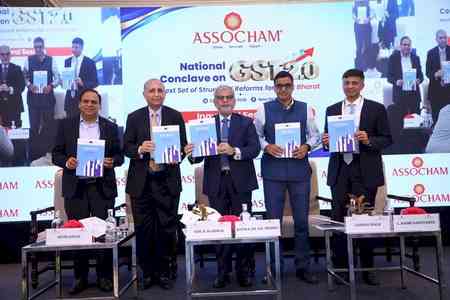
New Delhi, Oct 22 (IANS) India’s next phase of goods and services tax (GST) reforms should prioritise simplicity, technology‑driven compliance and faster dispute resolution, a report said on Thursday.
The report by ASSOCHAM, in collaboration with Lakshmikumaran & Sridharan Attorneys (LKS), proposed a 24-month timeline for capital-goods refunds, no tax notices below Rs 10,000 and faster appeals.
It urged that the next stage of GST reforms must prioritise simplicity, technology that makes compliance easier, effective and speedy dispute resolution, and competitiveness for manufacturing and exports.
Balasubramanian K, Joint Secretary, Department of Revenue, Ministry of Finance, emphasised the swift and effective implementation of GST 2.0 recommendations.
He highlighted the need for technology-driven systems to detect anomalies early, enabling greater ease of compliance for genuine taxpayers. “The objective is that we will have a system-based, technology-based system which would detect anomalies early enough so that we can have the ease shown to the genuine taxpayer,” he said.
"GSTAT is the first and the only tribunal today which caters to the needs of dispute resolution for both the Union government and the state governments,” said Dr. Justice (Retd) Sanjaya Kumar Mishra, President, Principal Bench, New Delhi, Goods & Services Tax Appellate Tribunal (GSTAT).
The report stressed more efficient tax administration with technology-led processes, lower compliance burdens, faster dispute resolution and stronger government–industry collaboration.
It also underscored the importance of digitisation and accessible information in helping businesses understand and comply with GST requirements.
Anil K. Agarwal, Past President, ASSOCHAM, outlined the priorities for the next phase of GST reform, stating, “As India advances towards Viksit Bharat, the next stage of GST reform must rest on four pillars: simplicity, technology that makes compliance easier, effective and speedy dispute resolution, and competitiveness for manufacturing and exports.”
A technical session further examined the evolving GST landscape following the GST Council’s recommendations, key compliance challenges faced by MSMEs and traders, and suggestions for addressing them. Discussions also covered perspectives on penalty proceedings under Section 122 and an analysis of recent GST judgments.
—IANS
aar/pk