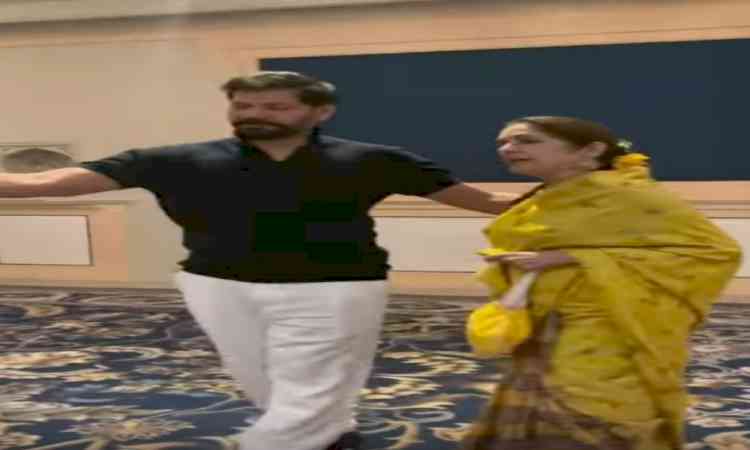
From Social Restrictions to the Spotlight: Sumitra Hooda Pednekar’s Journey
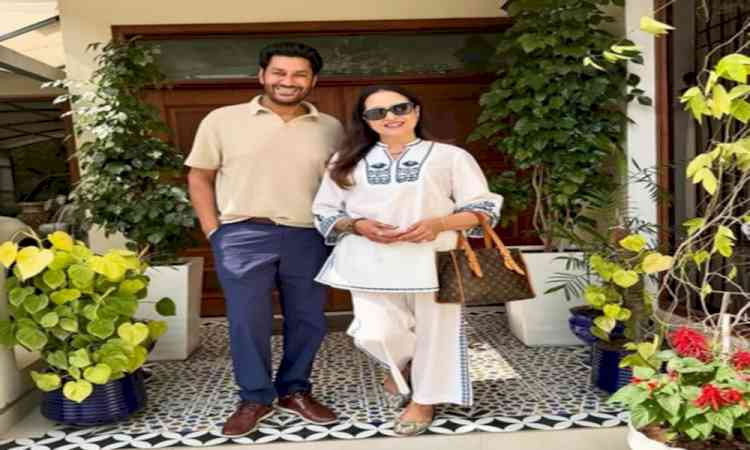
Long before Haryanvi cinema found a wider audience, Sumitra Hooda Pednekar was fighting battles much closer to home. As a schoolgirl in Rohtak, her ghungroos were broken and thrown away after her family discovered she was learning Kathak. She practised anyway. Years later, when she entered theatre and films, social opposition followed her—and at one point, she says, there was even an attempt to abduct her.
 City Air News
Sep 22, 2026 09:55
0
City Air News
Sep 22, 2026 09:55
0
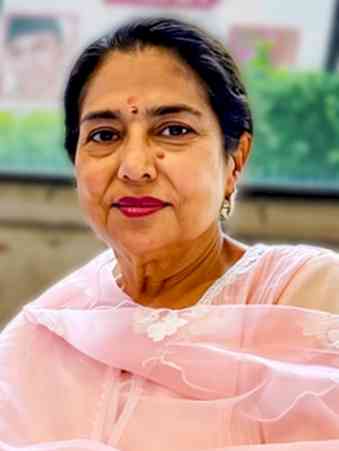
By Girish Saini
Rohtak, September 22, 2026: Long before Haryanvi cinema found a wider audience, Sumitra Hooda Pednekar was fighting battles much closer to home. As a schoolgirl in Rohtak, her ghungroos were broken and thrown away after her family discovered she was learning Kathak. She practised anyway. Years later, when she entered theatre and films, social opposition followed her—and at one point, she says, there was even an attempt to abduct her.
Today, the veteran actor-filmmaker, who has worked across theatre, dance, films, anchoring and filmmaking, looks at the changing landscape of Haryanvi cinema with optimism. She calls the present phase its “golden era” and believes young artists have opportunities that her generation could only dream of.
In a conversation, she looks back at the battles that shaped her journey and the lessons she hopes the next generation will carry forward.
Q. Your relationship with art began despite restrictions. What do you remember most about those days?
Sumitra Hooda: I grew up in my maternal uncle’s village, at a time when girls faced many restrictions. We were not allowed to watch saang, play Holi or participate freely in village activities. I was always curious and questioned these restrictions. Once, when I was stopped from watching a saang, I quietly slipped out and reached a pond outside the village. That rebellious streak probably stayed with me.
Q. And then came the ghungroos...
Sumitra Hooda: I was studying at Government Model School in Rohtak when I started learning Kathak. I bought a pair of ghungroos. When my grandfather found out, he broke them and threw them away. It was heartbreaking. But I did not stop dancing. I simply practised without ghungroos.
Q. Was that your first lesson in persistence?
Sumitra Hooda: Perhaps. I learnt very early that if you genuinely love something, you cannot give up just because someone tells you not to do it.
Q. How did you finally find the space to develop as an artist?
Sumitra Hooda: My family had a military background, so I got to live in places such as Mathura and Pune. At Vanasthali Vidyapith, I found an environment where I could develop my talent and confidence. When I returned to Rohtak and joined Jat College, I continued with dance, drama and mono-acting. At that time, women performing on stage was still not common.
Q. Your journey into films was far from easy.
Sumitra Hooda: It wasn't. The infrastructure was poor, electricity was scarce and many locations had hardly any roads. We worked with lamps, lanterns and petromax lights. More difficult was the social resistance. The opposition became so severe that there was even an attempt to abduct me. Thankfully, my family stood firmly behind me.
Q. How did you get involved with Haryanvi cinema?
Sumitra Hooda: During my college years, I worked on a film featuring Farida Jalal and Rakesh Pandey, but it could not be completed. Later, along with Arvind Swami, we formed a group to make Haryanvi films. We pooled our own money and started Bahurani. Financing was a major challenge, but with a government loan and guarantee, we managed to complete it. The film was released and was made tax-free in some theatres.
Q. Looking back, do you think your generation had to create the ecosystem that artists have today?
Sumitra Hooda: In many ways, yes. We were working when the basic infrastructure itself was missing. There were fewer platforms, fewer resources and much greater social resistance. But that struggle also taught us resilience.
Q. You have also watched your daughter Bhumi Pednekar build a career in films. What was your reaction when she wanted to enter the industry?
Sumitra Hooda: I supported her. After my marriage, there was no film environment in our home. Bhumi studied at an international school and later decided that she wanted to work in films. I told her to believe in hard work and stay focused. She initially worked in the casting department of Yash Raj Films, which eventually led to her first film.
Q. You describe the current phase as the ‘golden era’ of Haryanvi cinema. Why?
Sumitra Hooda: Because Haryanvi culture and cinema are reaching audiences far beyond Haryana. Technology, OTT platforms and social media have completely changed the possibilities for artists. Earlier, you depended on a few theatres or institutions. Today, there are several routes to reach an audience.
Q. Has the struggle become easier for artists?
Sumitra Hooda: The struggle has changed, not disappeared. Earlier, the biggest hurdles were social opposition and lack of resources. Today, competition is much tougher. But opportunities have increased enormously. The answer is to keep learning and improving.
Q. What should young artists keep in mind?
Sumitra Hooda: Don't be afraid of failure. Keep alternatives open, but remain committed to what you love. Don't constantly compare yourself with others. Compete with yourself. And don't think of Haryanvi cinema as something meant only for a regional audience. Take your work to national and international film festivals.
Q. What has changed most for women wanting to pursue careers in the arts?
Sumitra Hooda: Parents are much more supportive today and girls have far more opportunities. But opportunity alone is not enough. You need confidence and courage to use it. Women should not be afraid of pursuing their dreams.
Q. What keeps you busy now?
Sumitra Hooda: Discussions are on for Lakhmi Part-2. A few other projects are also being discussed. I hope work on them moves forward soon.
Q. After such a long journey, what would you say to the girl who once practised Kathak without ghungroos?
Sumitra Hooda: (Laughs) I would tell her—keep going. The world may try to stop you in many ways, but if you believe in yourself, don't give up.