France calls for text-based negotiations to reform UNSC
France has called for text-based negotiations to speed Security Council reforms and add permanent members, to ensure its legitimacy.
 IANS
Jan 27, 2026 10:46
0
IANS
Jan 27, 2026 10:46
0
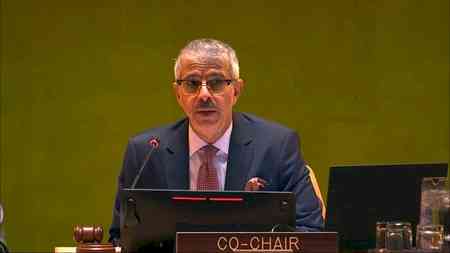
United Nations, Jan 27 (IANS) France has called for text-based negotiations to speed Security Council reforms and add permanent members, to ensure its legitimacy.
France’s Permanent Representative Jerome Bonnafont said on Monday that France “will remain fully engaged in the achievement of Security Council reform to enhance its representativeness and legitimacy, through expansion in both categories of membership”, permanent and non-permanent.
“France is convinced that a reform is possible in this area and that there is a need to begin negotiations based on a draft text, without awaiting an unattainable consensus, which is not required under the Charter,” he said at the Council’s high-level debate on “Reaffirming International Rule of Law”.
The reform process known as Inter-Governmental Negotiation (IGN) faces a roadblock from a small group of countries led by Italy that has used procedural manoeuvres to prevent the adoption of a negotiating text that can set the agenda for discussions and track progress.
The group that calls itself Uniting for Consensus and includes Pakistan, demands that there should be consensus on reforms before a negotiating text can be adopted, trapping the IGN in a Catch-22 where a consensus can’t be reached without a basic negotiating text.
India and several other countries have demanded that the IGN adopt a negotiating text or draft to allow it to make meaningful progress.
During Monday’s debate, India and the Secretary-General also pressed for early Council reforms.
Urgently reforming the Security Council and adding permanent members to make the international rule of law effective when the world organisation “at its core is under strain” was needed, India’s Permanent Representative P Harish said.
“Paralysis and lack of effectiveness in tackling conflicts remain a significant shortcoming”, testing the UN’s credibility, he said.
Guterres, who warned that “around the world, the rule of law is being replaced by the law of the jungle”, said it was imperative to reform the Council without delay.
Only the Council can make decisions binding on all, and “no other body or ad-hoc coalition can legally require all member states to comply with decisions on peace and security,” he said.
“That is why reform is essential; that is why we must act without delay to enhance the representation and effectiveness of this Council,” he stressed.
France backs India getting a permanent seat on a reformed Council, where African nations would also gain one.
Bonnafont said, “Defending international law also means recognising that multilateralism must be able to evolve. In 2026, France will continue to advocate for a more representative, more effective, and more operational global governance.”
That also includes the Council, he said.
The reforms are important given the “violations of international law, including international human rights law and international humanitarian law, are far too numerous, be it in Sudan, the Great Lakes, Gaza or Ukraine”, he said.
“However, the desire of certain States to adopt obstructive positions undermines the ability of the Security Council to act,” he said. “Yet every silence facing these violations feeds mistrust and weakens our collective credibility.”
Although France is a permanent member with veto powers on the Council, it campaigns for limiting its use so that it is not used by a country when its interests are involved or when grave violations of humanitarian law are at stake.
--IANS
al/dan