FICCI Net Zero Forum 2026 charts roadmap for India’s climate-responsible future
The second edition of the FICCI Net Zero Forum – “Pathways to a Climate-Responsible Future” held at The Park, Raj Bhavan Road, Hyderabad, on Friday, bringing together policymakers, industry leaders, sustainability experts, financial institutions, and technology innovators.
 City Air News
Apr 10, 2026 08:34
0
City Air News
Apr 10, 2026 08:34
0
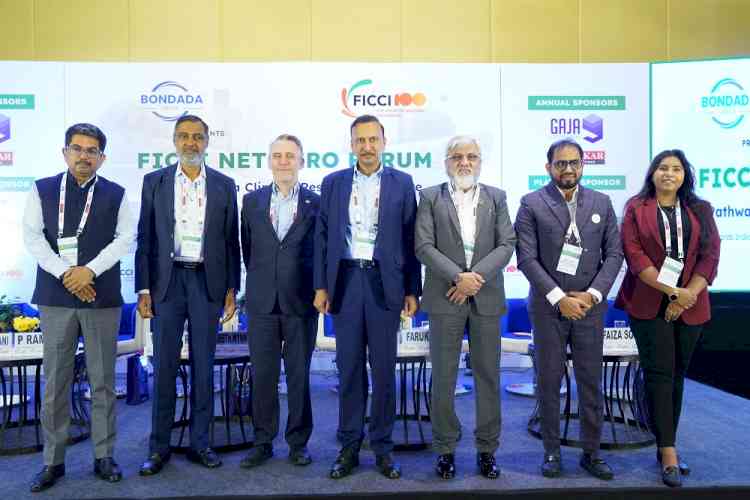
Hyderabad, April 10, 2026: The second edition of the FICCI Net Zero Forum – “Pathways to a Climate-Responsible Future” held at The Park, Raj Bhavan Road, Hyderabad, on Friday, bringing together policymakers, industry leaders, sustainability experts, financial institutions, and technology innovators.
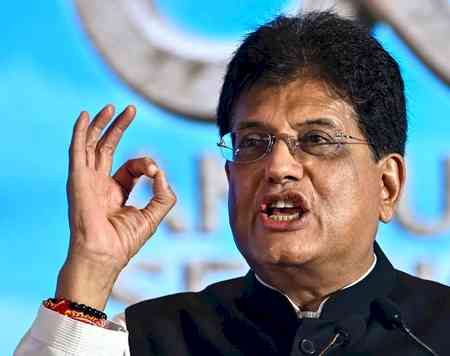
Pralhad Venkatesh Joshi, Minister, Ministry of New and Renewable Energy, Government of India, in his video message, emphasized that India is firmly resolved to lead the global transition towards net-zero emissions. Reinforcing this national commitment, the Supreme Court of India recently observed that India’s transition from fossil fuels to non-fossil (renewable) energy is a “fundamental necessity,” not merely a policy choice, underscoring the urgency and inevitability of this shift.
India’s journey towards energy Atmanirbharta (self-reliance) is no longer aspirational but is being actively delivered through decisive policy action and rapid capacity expansion. Today, India stands as the third-largest country globally in solar power capacity, after China and the United States. The country has achieved a significant milestone, with approximately 50–55% of its installed electricity capacity coming from non-fossil fuel sources, including solar, wind, hydro, and nuclear energy. A landmark achievement in this transition is India reaching around 150 GW of installed solar power capacity, positioning it among the top three solar power nations globally and strengthening its role as a major clean energy leader. Highlighting the economic dimension, Hon'ble Minister noted that India’s progress towards net-zero emissions could generate approximately 51 lakh (5.1 million) green jobs over the next four years, reflecting the strong linkage between climate action and economic growth. He further emphasized that the FICCI Net Zero Forum will play a crucial role in mobilizing stakeholders, driving investments, and fostering collaboration, helping India set a global benchmark for sustainable development.
Navin Mittal, Special Chief Secretary, Department of Energy, Government of Telangana, in his keynote address, reaffirmed Telangana’s strong commitment to clean energy transition and outlined policy priorities to accelerate renewable energy adoption and industrial decarbonisation. He highlighted that following India’s solar revolution, the next major transformation will be driven by energy storage, which will play a critical role in ensuring reliability and efficiency in renewable systems. Drawing attention to current energy consumption patterns, he noted that India consumes nearly 150 billion litres of petrol and diesel annually, underscoring the urgent need for cleaner alternatives. He emphasized that solar-powered electric mobility can cost as low as ₹0.60 per kilometre, compared to approximately ₹10 per kilometre for fossil fuels and ₹2 per kilometre for conventional EVs. Mr. Mittal also pointed out that nearly 75% of energy is lost in conventional systems, whereas electric mobility solutions achieve 80–90% efficiency, making them significantly more sustainable. He further underscored the importance of industry collaboration, noting that platforms like the FICCI Net Zero Forum will play a crucial role in driving innovation and accelerating India’s transition to a low-carbon economy.
Addressing the gathering, Dr. Bondada Raghavendra Rao, Chairman, FICCI Telangana Sustainability Panel and Chairman & Managing Director, Bondada Group, said, "Bharat’s pathway to Net Zero represents one of the most significant economic and societal transformations of our time. It is an opportunity to build a future where growth is not only robust, but also sustainable and inclusive. Realising this vision will require deep collaboration between industry, government, financial institutions, and global stakeholders. The convergence of progressive policy, responsible industry leadership, accessible climate finance, and advanced technology will define the pace of this transition. As we move forward, the focus must remain on actionable outcomes that drive real impact, ensuring that Bharat emerges as a global leader in climate-responsible development."
Rear Admiral R Sreenivas, VSM, (Retd.), Chief Executive Officer, Bondada Group said, “Achieving Net Zero will fundamentally depend on how effectively we reimagine our energy systems and industrial ecosystems through technology-led transformation. The shift is not just about adopting renewable energy, but about integrating smarter grids, digital intelligence, and efficient infrastructure to drive systemic change. For industries, this is an opportunity to transition from being energy consumers to becoming active participants in a sustainable ecosystem.
Gareth Wynn Owen, British Deputy High Commissioner Hyderabad, who was the chief guest and inaugurated the conference underscored that strong global partnerships and collaborative action are essential to achieving climate goals and advancing sustainable development. Highlighting deepening UK–India cooperation, he referred to significant investments such as a £1 billion (approx. USD 1 billion) UK-backed project in Vijayawada, Andhra Pradesh, as a testament to growing clean energy collaboration. He noted that both countries are aligned under the leadership of their Prime Ministers, with a shared vision towards long-term climate targets, including 2035 ambitions. He also highlighted key bilateral initiatives such as the UK–India Green Grid Initiative, ongoing green energy dialogues, and the work of the UK–India Task Force, which are accelerating cooperation in clean technologies and energy transition. Stressing that climate finance remains the biggest challenge, he expressed optimism that India and the UK can work more closely to unlock and scale global finance for net-zero initiatives, and called for enhanced access to international climate finance.
The Forum served as a dynamic platform to accelerate India’s transition to a Net Zero economy, with strong emphasis on industry–policy convergence, clean energy adoption, and scalable climate solutions. Over 200 delegates participated in the event. The Forum featured two panel discussions on: Net Zero Pathways: Technology, Energy Systems & Industrial Transition and Climate Finance, Carbon Markets & Green Investments. A dedicated workshop on AI and digital tools for Net Zero showcased innovations in carbon accounting, emissions tracking, and predictive analytics.
The Forum reaffirmed FICCI’s commitment to facilitating dialogue, partnerships, and actionable pathways to support India’s Net Zero ambitions while strengthening economic growth and resilience.