‘Every Woman Has a Fire for Equality, Safety’- Haryana poet and feminist commentator Rashmi Bajaj on why safe public spaces must become a social priority
From Gen-Z protests to education and merit, she argues that freedom needs both equal opportunity and social responsibility.
 City Air News
Oct 1, 2026 09:22
0
City Air News
Oct 1, 2026 09:22
0
By Girish Saini
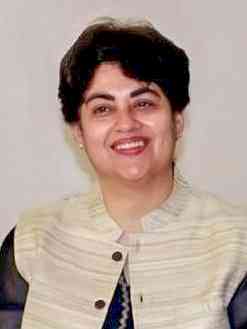
Rohtak: “Every woman carries a fire that keeps burning within her.” For poet and feminist commentator Rashmi Bajaj, that fire is the enduring quest for dignity, equality and safety. In a conversation, Bajaj reflects on women’s safety, gender equality, Gen-Z activism, education and merit, arguing that a truly progressive society is one where women can move freely, speak without fear and pursue their ambitions on equal terms.
Q. Your poetry speaks strongly about women’s safety and equality. What does equality mean to you?
RB: Equality is not a women-versus-men issue. It is about creating a society where both have equal rights, dignity and opportunities. Real progress will come when women can pursue their dreams without fear and participate equally in every sphere of life.
Q. Do women still need to see themselves as vulnerable?
RB: No. Women need to recognise their own strength and capabilities. But empowerment cannot mean leaving women to fight the battle alone. Families, schools, institutions and society must change their attitudes and everyday behaviour. Safety is a collective responsibility.
Q. Gen-Z has increasingly been taking to the streets on social and political issues. How do you see this assertion?
RB: Young people should certainly raise their voice when they see injustice or shortcomings in the system. Questioning and debate strengthen democracy. But protest and dissent should remain peaceful and dignified. We can disagree strongly without losing respect for dialogue and social responsibility.
Q. Can education become the biggest equaliser in society?
RB: It certainly can, provided quality education reaches children from economically weaker families. No child’s talent should be limited by financial circumstances. We need an education system where poverty does not decide how far a child can dream or how much potential they can realise.
Q. At a time when access and inclusion are being widely debated, should merit remain central to higher education?
RB: Equal opportunity is essential, but competence and merit also matter, particularly in specialised fields such as medicine, engineering and science. A strong nation needs knowledge, talent, research and scientific thinking. The challenge is to expand opportunities for disadvantaged sections while ensuring that ability and excellence receive their due place.
Rashmi believes the conversation around women’s freedom must ultimately move beyond slogans and laws to everyday public life.
Her poetry captures that aspiration in lines that evoke the sun, moonlight and the right to claim both as one’s own. For her, the destination is clear: a society where no street, road or public space—whether by day or night—makes a woman feel unsafe.
Safe public spaces, she says, are not a special concession to women but a measure of how an equal society functions.