Ensure Government Scheme Benefits Reach the Last Person in the Line: HIRD Director Dr. Virender Singh Chauhan
Social audit is not merely a means to inspect schemes; rather, it is a powerful tool for ensuring transparency, accountability, and public participation in rural development initiatives. This observation was made by Dr. Virender Singh Chauhan, Director of the Haryana Institute of Rural Development (HIRD), while addressing participants during the concluding session of a thirty-day training program focused on the subject of social audit.
 Girish Saini
May 27, 2026 10:57
0
Girish Saini
May 27, 2026 10:57
0
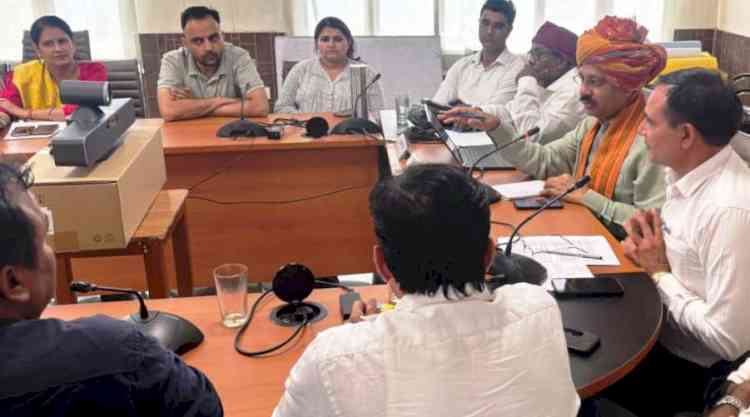
Nilokheri, May 27, 2026: Social audit is not merely a means to inspect schemes; rather, it is a powerful tool for ensuring transparency, accountability, and public participation in rural development initiatives. This observation was made by Dr. Virender Singh Chauhan, Director of the Haryana Institute of Rural Development (HIRD), while addressing participants during the concluding session of a thirty-day training program focused on the subject of social audit.
Dr. Chauhan emphasized that it must be ensured that every laborer is issued a Job Card, and that work is assigned to workers strictly in accordance with their capabilities and skill sets. He noted that when a laborer receives work commensurate with their qualifications, they perform with greater diligence, dedication, and self-confidence; this not only enhances the quality of the schemes but also elevates the workers' standard of living. He called upon officials and resource persons to work with sensitivity and integrity to ensure that the benefits of these schemes reach the very last person standing in the line.
Dr. Virender Singh Chauhan stated that social audit reinforces the democratic spirit wherein the public itself monitors development activities. He added that when society becomes aware and actively reviews schemes, it serves to curb corruption and irregularities, thereby ensuring that the intended benefits reach the eligible beneficiaries. He urged the participants to apply the knowledge and experience gained during the training at the grassroots level to make the process of rural development more transparent and accountable.
Vishwanath Singh, the Lead Course Coordinator hailing from Jharkhand, said that during the program, participants received both practical and theoretical training on various topics related to social audit—including the audit process itself, the review of village-level schemes, record verification, public hearings, and community participation. He noted that the objective of this training was to cultivate a pool of skilled resource persons capable of promoting transparency and good governance in rural areas.
Rajesh Sinha, representing the National Institute of Rural Development, remarked that the training provided participants with hands-on experience, thereby enabling them to effectively evaluate schemes at the village level and successfully conduct public hearings.
HIRD Assistant Professor and Coordinator Wazir Singh presented the report on the program. Present on the occasion were Assistant Professors Sushil Mehta, Sandeep Kumar, and Kamaldeep Sangwan; Advisor Neelam Chhikara from the State Panchayat Resource Center; along with Saurabh Arora, Ajay Kumar, Mohit Sharma, Sunil Kumar, Rajneesh Kumar, Mahendra Singh, Sanjeev Kumar, Praveen Kumar, Shailendra Kumar, Ishwar Singh, and other dignitaries.