Dewan Urges PSERC to Shield Punjab Industry from Power Shock, Calls for Tariff Stability and Reforms
Taking up the cause of Ludhiana’s embattled industrial sector, reeling under a host of challenges linked to the Punjab State Power Corporation Limited (PSPCL), former District Congress Committee, Ludhiana (Urban) President and Ex-Chairman of the Punjab Large Industrial Development Board, Pawan Dewan, has formally shot off a letter to the Punjab State Electricity Regulatory Commission (PSERC), urging immediate redressal through the upcoming tariff framework.
 City Air News
Jan 21, 2026 07:40
0
City Air News
Jan 21, 2026 07:40
0
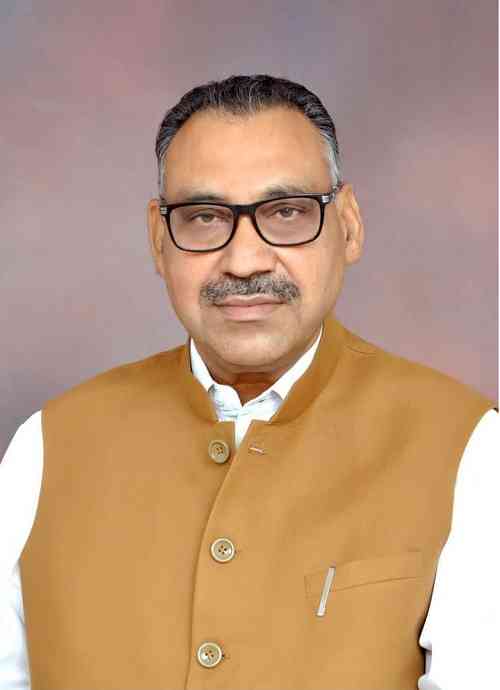
Ludhiana, January 21, 2026: Taking up the cause of Ludhiana’s embattled industrial sector, reeling under a host of challenges linked to the Punjab State Power Corporation Limited (PSPCL), former District Congress Committee, Ludhiana (Urban) President and Ex-Chairman of the Punjab Large Industrial Development Board, Pawan Dewan, has formally shot off a letter to the Punjab State Electricity Regulatory Commission (PSERC), urging immediate redressal through the upcoming tariff framework.
Highlighting that thousands of MSMEs and large-scale industries in Ludhiana, key drivers of Punjab’s economy through their robust manufacturing output, are now reeling under severe stress due to exorbitant power tariffs, Dewan drew the attention of PSERC Chairman Viswajeet Khanna to the continued neglect of critical issues plaguing the industrial sector, adding that this inaction has already led to the closure of numerous units, while many others have migrated to states offering more competitive and industry-friendly incentives. “This exodus,” he cautioned, “not only imperils the livelihoods of lakhs of workers but also erodes Punjab’s stature as a manufacturing powerhouse.”
Dewan emphasized that with PSERC initiating the process for determining the power tariff for FY 2026–27, the moment is opportune to address the pressing concerns of the industrial sector on a priority basis. “Ludhiana’s industry is already battling with soaring raw material costs, logistical constraints and mounting inter-state competition,” he noted. “In such a fragile environment, any steep or disproportionate hike in power tariffs would be unsustainable. It is, therefore, imperative that the Commission adopts a prudent and equitable approach to safeguard industrial viability and economic stability.”
In his letter, Dewan further underscored the urgent need for long-term policy certainty to revive industrial confidence. He urged the Commission to implement a fixed industrial tariff structure for a minimum of five years, emphasizing that such stability is critical for strategic planning, cost management and sustained growth. “A competitive industrial tariff,” he asserted, “is not a concession, it is a forward-looking investment in Punjab’s economic vitality, job creation and industrial resilience.”
Expanding on the industry's unresolved concerns, Dewan reiterated the long-standing and legitimate demand for a phased and transparent reduction in cross-subsidy surcharges, stressing that this must now be addressed with urgency and sincerity. “The Commission must mandate a least-cost power procurement strategy, backed by clear and time-bound AT&C loss reduction targets,” he urged. “Moreover, every rupee of investment must yield measurable improvements in power quality and reliability, ensuring that industries see tangible benefits on the ground.”
Dewan further pointed out that beyond policy-level concerns, the industry continues to grapple with persistent operational challenges that require urgent intervention. “Frequent unscheduled power outages, feeder tripping, voltage fluctuations and a glaring shortage of technical staff at substations have severely undermined power reliability across industrial zones,” he stated. “These recurring disruptions are not only hampering productivity but also eroding investor confidence. Each of these issues demands immediate and decisive redressal,” he opined.
Dewan also drew attention to the deepening crisis surrounding Power Quality (PQ) Meters, calling it a matter of grave concern. He pointed out that despite a nationwide shortage and exorbitant prices, driven by limited vendor availability, industries are being penalized for non-compliance. “This situation is not only unjust but also counterproductive,” he remarked. “In light of these ground realities, the Commission must grant an immediate moratorium on PQ meter-related penalties,” he added.
Dewan also urged the Commission to adopt a comprehensive “Clean Pole Policy” aimed at systematically removing unauthorized third-party cables that compromise infrastructure integrity and pose safety risks. “Equally critical,” he added, “is the need for urgent recruitment drives to fill the acute shortage of technical personnel, particularly at substations, where staffing gaps are directly undermining service reliability.” Concluding his letter, Dewan appealed to PSERC to strike a judicious balance between ensuring the financial viability of the power utility and safeguarding the survival and competitiveness of Punjab’s industrial backbone.