CSDE marks the International Day of Older Persons with fieldwork, investigator training and an everyday safety guide for senior citizens
 City Air News
Sep 30, 2026 11:27
0
City Air News
Sep 30, 2026 11:27
0
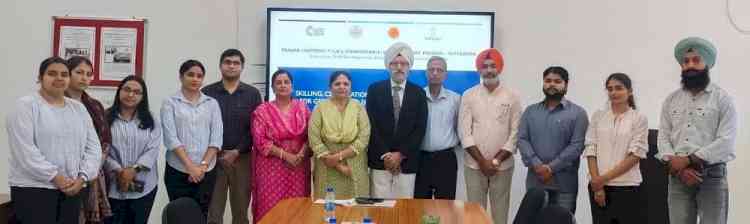
Chandigarh, 30 September 2026: The International Day of Older Persons, the Centre for Skill Development & Entrepreneurship (CSDE), Panjab University (PU), Chandigarh, announced the start of a major study of geriatric and elderly care in Chandigarh. The project, 'Skilling, Certification and Employment Pathways for Geriatric and Elderly Care in Chandigarh: A Policy Roadmap and Implementation Framework', is sanctioned by NITI Aayog under the State Support Mission. CSDE leads it as the Lead Knowledge Institution for the Chandigarh Administration.
The initiative speaks directly to this year's global observance. The United Nations has chosen the theme 'The Age of Longevity: Rethinking Systems for Longer Lives' and calls on governments, academia and researchers to align systems with the realities of longer lives. India is now home to about 153 million people aged 60 and above, more than one in ten of its population. That number is projected to reach 347 million by 2050. Families increasingly depend on paid attendants, agencies and home care platforms. Yet local evidence on elder care in Chandigarh is thin. The last community study is based on fieldwork conducted in the late 1990s.
The study will close that gap. An eight-week field survey will reach senior citizens who use paid care and paid caregivers. Interviews and focus groups will add depth. The team will use internationally recognised measures of daily functioning, well-being and caregiver burnout. A parallel review will test national qualifications from the National Institute of Social Defence (NISD) and the National Skill Development Corporation (NSDC) against live registers and local needs. The work is organised around four occupational tracks. These are Geriatric Care Provider, Geriatric Caregiver, Wellness Therapist (Elderly) and Elderly Care Companion.
The outcome will be a policy roadmap that sets out a tiered skilling pathway, a route to certification for experienced informal caregivers, and links to employment through the national SHATAYU register of trained caregivers. The Directorate of Social Welfare, Chandigarh Administration, is facilitating access for the study.
"Longer lives call for care that families can trust and afford," said Prof. Suveera Gill, Honorary Director, CSDE, and Principal Investigator. "Chandigarh has the institutions to deliver it. What it lacks is current evidence on who needs care, who provides it and how well they are trained. This study will provide that evidence. It will turn it into a certified pathway to dignified employment for caregivers and better care for our elders."
The project team underwent training before commencing fieldwork, held at CSDE on 29 September. Chairperson, Centre for Social Work, PU, Prof. Monica Munjial Singh spoke on 'Fieldwork with Senior Citizens: Rigour, Respect and Responsibility'. She addressed ageing sensitivity, informed consent, neutral interviewing and safeguarding. Mr. I.P. Singh, Legal Advisor, Chandigarh Residents' Associations Welfare Federation (CRAWFED) and President, Resident Welfare Association, Sector 11, spoke on the role of Resident Welfare Associations in supporting older residents and in verifying domestic help and attendants.
To mark the day, CSDE has also released 'Everyday Do's and Don'ts', a two-page guide for senior citizens. It offers plain advice on medicines, home safety, travel, banking, phone fraud and staying connected. It warns against sharing OTPs, installing screen-sharing apps and yielding to fake 'digital arrest' calls. It lists key helplines. These are 112 for emergencies, 1930 for cyber fraud, 14567 for the Elder Line and 108 for an ambulance. The guide will be shared with older residents and their families during fieldwork.