CICU Strongly Raises Key Industrial and MSME Concerns Before CBIC Chairman; Seeks Time-Bound GST Refunds and Manufacturing-Friendly Reforms
The Chamber of Industrial & Commercial Undertakings (CICU), Ludhiana, strongly raised several critical GST-related concerns affecting manufacturing industries, exporters and MSMEs during an interactive session organised by the Central Goods and Services Tax (CGST), Chandigarh Zone, on the Key Outcomes of the 57th GST Council Meeting.
 City Air News
Oct 31, 2026 05:26
0
Ludhiana, October 31, 2026: The Chamber of Industrial & Commercial Undertakings (CICU), Ludhiana, strongly raised several critical GST-related concerns affecting manufacturing industries, exporters and MSMEs during an interactive session organised by the Central Goods and Services Tax (CGST), Chandigarh Zone, on the Key Outcomes of the 57th GST Council Meeting.
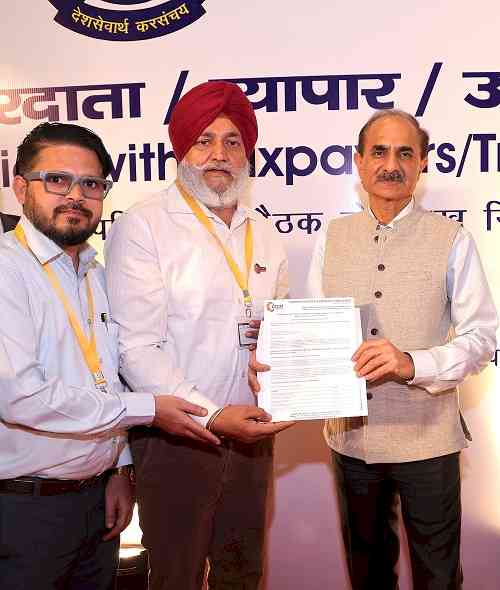
The programme was attended by Vivek Chaturvedi, Chairman, Central Board of Indirect Taxes and Customs (CBIC), and Sanjay Mangal, Member (GST), CBIC, along with senior departmental officials and representatives from trade and industry. Representing CICU, Sarvjit Singh, Co-convenor, Export Committee, and Vinod Kumar, Administration, participated in the interaction and presented the Chamber's concerns regarding the practical difficulties being faced by manufacturing MSMEs. They also handed over a detailed memorandum to Sanjay Mangal, Member (GST), CBIC, requesting the Board's intervention and necessary policy and procedural reforms.
The memorandum highlighted that delayed GST refunds and inverted duty structures are creating serious working-capital pressures for manufacturing units. In several sectors, including bicycles and components, engineering goods, packaging, tractor parts and sewing machines, raw materials attract GST at higher rates, while finished products are taxed at lower rates. This results in the accumulation of eligible Input Tax Credit (ITC), leaving substantial business funds blocked in the GST system. CICU emphasised that the issue goes beyond tax compliance and directly affects the financial health and competitiveness of domestic manufacturers. MSMEs require continuous working capital to purchase raw materials, pay wages, electricity bills and suppliers. Delayed refunds compel businesses to depend on borrowed funds, increasing interest costs and making production more expensive.
The Chamber also cautioned that such financial and tax-related disadvantages could gradually make importing finished goods commercially more attractive than manufacturing them domestically, depending on the overall landed cost. This could adversely affect local investment, employment generation, indigenous supply chains and the Government's Make in India and Atmanirbhar Bharat objectives.
CICU welcomed the progressive decisions of the 57th GST Council Meeting, particularly the initiatives towards automation of GST refund processing and addressing inverted duty structure-related refund issues. The Chamber appreciated these measures as important steps towards improving ease of doing business, reducing manual intervention and releasing working capital to industry. CICU expressed hope that these reforms would be implemented effectively and translate into timely relief for genuine taxpayers.
Among its key recommendations, CICU sought:
• Time-bound GST refunds: A proposed seven-day processing and release target for eligible, established and low-risk taxpayers, wherever legally feasible.
• AI-enabled automated refund mechanism: A return-based system to identify eligible refunds, verify records, flag discrepancies and fast-track genuine claims.
• Rationalisation of inverted duty structures: A sector-wise review of GST rates on raw materials and finished goods to reduce the recurring accumulation of ITC.
• Reduction in refund-related professional costs: CICU highlighted industry feedback that taxpayers may incur professional charges of approximately 5–10% of the refund amount, adding to their financial burden.
• Uniformity in Central and State GST refund procedures: Consistent documentation requirements, processing standards and grievance-redressal mechanisms.
• Other important taxpayer concerns: Timely GST audits, protection of bona fide purchasers in ITC matters, confidentiality of taxpayer data and improved coordination between the department and industry.
During the interaction, Vivek Chaturvedi, Chairman, CBIC, took note of the concerns and suggestions raised by CICU and assured that the issues would be taken up with priority at the appropriate level, with efforts to address the genuine difficulties faced by industry on a priority basis. The assurance was welcomed by CICU representatives as a positive step towards constructive engagement between the tax administration and industry.
CICU reiterated its commitment to acting as a constructive bridge between industry and government authorities. The Chamber expressed confidence that the issues raised during the interaction and the recommendations submitted to CBIC would receive due consideration and lead to practical improvements in the GST framework. CICU believes that timely refunds, rational tax structures and transparent procedures are essential not only for MSME growth but also for strengthening India's manufacturing competitiveness in the global market.