CICU Flags Crumbling Roads, Policy Gaps Before Minister Mundian; Seeks Growth-Friendly
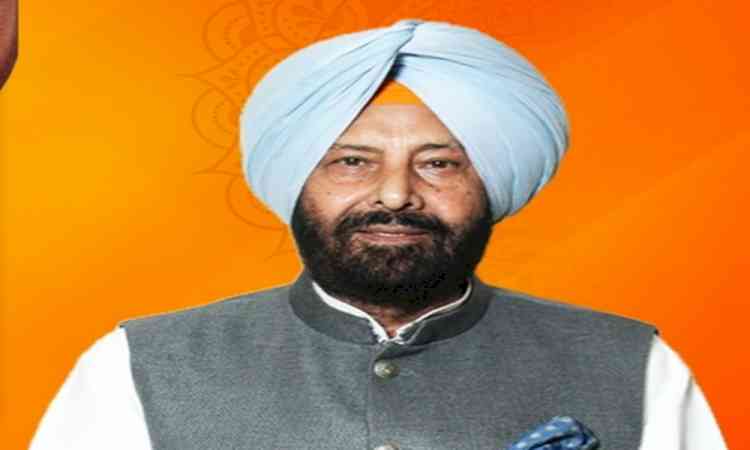
In a significant interaction reflecting the growing urgency of infrastructure and policy reforms in Punjab’s industrial belts, a high-powered delegation of the Chamber of Industrial & Commercial Undertakings (CICU), Ludhiana, met Hardeep Singh Mundian, Cabinet Minister for Revenue, Rehabilitation & Disaster Management, Water Supply & Sanitation, and Housing & Urban Development, at his office in PUDA Bhawan, Mohali. The meeting focused on pressing road connectivity issues, industrial land-use challenges, and long-pending policy anomalies affecting both existing and upcoming industries.
 City Air News
Jan 22, 2026 01:49
0
City Air News
Jan 22, 2026 01:49
0
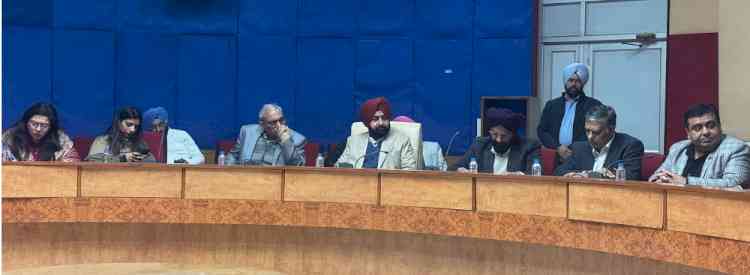
Ludhiana, January 22, 2026: In a significant interaction reflecting the growing urgency of infrastructure and policy reforms in Punjab’s industrial belts, a high-powered delegation of the Chamber of Industrial & Commercial Undertakings (CICU), Ludhiana, met Hardeep Singh Mundian, Cabinet Minister for Revenue, Rehabilitation & Disaster Management, Water Supply & Sanitation, and Housing & Urban Development, at his office in PUDA Bhawan, Mohali. The meeting focused on pressing road connectivity issues, industrial land-use challenges, and long-pending policy anomalies affecting both existing and upcoming industries.
Leading the delegation, Upkar Singh Ahuja, President, CICU, underscored that poor road connectivity has emerged as one of the biggest bottlenecks for industry, trade, and society at large. He highlighted that key arterial roads connecting industrial clusters—particularly the Ramgarh–Chandigarh Road up to Sahnewal Airport, GT Road stretches, and Chandigarh Road to Paharuwal—are in a severely deteriorated condition. These roads witness heavy movement of industrial vehicles, airport traffic, workers, students, and residents, yet suffer from narrow carriageways, damaged surfaces, waterlogging, and lack of lighting. “Industries cannot remain competitive if logistics is slow, unsafe, and costly,” Ahuja said, adding that poor roads also endanger students, workers, and daily commuters. He urged the Minister to prioritise time-bound widening, re-carpeting, proper drainage, and street lighting, stressing that robust infrastructure is essential not only for industrial growth but also for public safety and quality of life.
Honey Sethi, General Secretary, CICU, and Gautam Malhotra, Vice President, CICU, reinforced these concerns, pointing out that repeated temporary repairs fail within months due to heavy traffic load. They called for durable, high-quality execution with strict monitoring, so that public funds yield long-term benefits. Raising a crucial planning issue, Rahul Ahuja, Convener, Apex Chamber of Commerce, flagged concerns related to road width norms under the new government policies. He suggested that instead of a rigid 100-foot road width requirement, a more practical 80-foot width should be considered in certain industrial areas. “A flexible approach will ensure that more existing industries can benefit from the new policy framework, rather than being excluded due to technical constraints,” he said.
A major policy concern was highlighted by Baldev Singh of PSAIMA (Punjab State Agriculture Implement Manufacturers Association), who drew attention to the issue of mixed land use. He pointed out that the new policy does not provide adequate concessions or safeguards for units established prior to the notification, resulting in unintended hardship for long-standing industries. According to him, while new policies aim to streamline development, they must not penalise existing units that have been operating legally for decades and contributing to employment and revenue.
Infrastructure planning within industrial estates was another key issue raised by Bhupinder Singh and Jasbir Singh of Asian Cranes & Elevators. They urged the Government to simplify the process of bifurcation and fragmentation of industrial plots, stating that the current procedures are cumbersome and time-consuming. Simplification, they said, would significantly enhance ease of doing business, encourage expansion, and attract fresh investment without compromising regulatory oversight.
Adding a broader developmental perspective, G.S. Dhillon of Udan Media suggested that Punjab should seriously consider developing a dedicated Exhibition and Convention Centre under the MICE (Meetings, Incentives, Conferences and Exhibitions) framework. Such a facility, he said, would not only promote industrial exhibitions and trade fairs but also boost tourism, hospitality, and the service economy, positioning Punjab as a preferred destination for national and international business events.
Responding to the delegation, Minister Hardeep Singh Mundian gave a patient hearing and assured CICU that the Government is committed to balanced development, improved infrastructure, and industry-friendly governance. He stated that the concerns regarding roads, land use, and industrial policies would be examined in detail and taken up with the concerned departments for appropriate action.
CICU reiterated that its engagement with the Government is driven by a larger commitment towards industrial growth, employment generation, public safety, and societal welfare. The Chamber emphasized that strong infrastructure and pragmatic policies are the backbone of a resilient economy and assured the Minister of its full cooperation in shaping a progressive and inclusive industrial ecosystem for Punjab.