Chinese missile parts in Houthi hands put Beijing-Riyadh ties under scrutiny: Report
The Saudi Arabia-Houthi conflict has evolved beyond a regional confrontation, emerging as a focal point for wider concerns over arms proliferation, geopolitical rivalries and the use of advanced military technologies, a report has stated.
 IANS
Nov 7, 2026 09:20
0
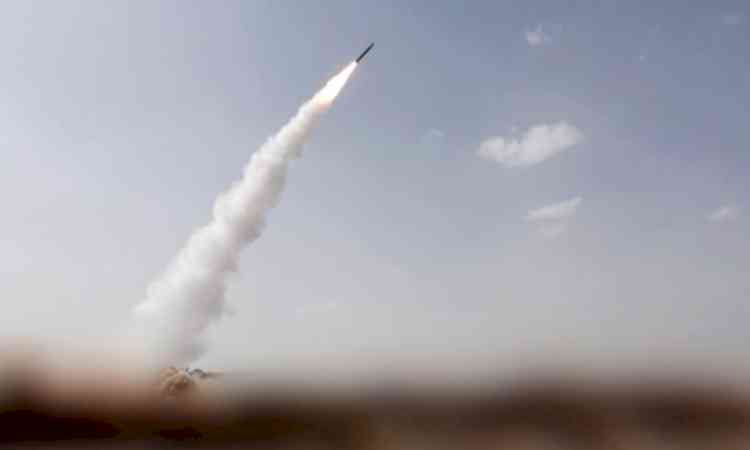
Kampla, Nov 7 (IANS) The Saudi Arabia-Houthi conflict has evolved beyond a regional confrontation, emerging as a focal point for wider concerns over arms proliferation, geopolitical rivalries and the use of advanced military technologies, a report has stated.
It noted that the questions surrounding Chinese-origin components, whether they involve oversight failures, illicit procurement channels or deeper concerns, have brought a new dimension to the Saudi-China relationship.
“Despite the striking improvement in Saudi Arabia–China relations, evidence that Chinese-origin missile components are reaching Houthi procurement networks has introduced a deeply troubling question into an otherwise flourishing partnership. Beijing has positioned itself as a major economic partner of Riyadh, a key buyer of Saudi oil, and a diplomatic broker in the 2023 Saudi-Iran rapprochement,” Uganda-based media outlet PML Daily reported.
“Yet the reported flow of Chinese-made components to the Iran-backed Houthis suggests a more cynical calculation: Yemen’s battlefield may be serving as an unintended but commercially valuable testing ground for Chinese military technology,” it added.
Citing investigations by UK-based Conflict Armament Research, the report said that specialised missile components, such as rocket-motor parts, stabilising fins and airframe hardware, had been traced to Chinese suppliers and consignments headed for Houthi-controlled territories.
“While direct state involvement has not been publicly established. If Chinese-designed components are being combat-tested through Houthi attacks on Saudi territory, energy infrastructure, and strategic installations, the benefits flow directly back to China’s defence-industrial complex: real-world performance data, identification of technical weaknesses, and opportunities for further modification. That feedback loop could ultimately make Chinese weaponry more attractive and more expensive on the international market,” it mentioned.
According to the report, the conflict has already emerged as a testing ground for drones, precision-guided missiles and electronic warfare systems. It noted Riyadh must therefore view the issue as more than a supply-chain irregularity and recognise it as a strategic warning: “China cannot simultaneously present itself as Saudi Arabia’s partner while allowing its industrial ecosystem to arm and refine the very forces targeting the Kingdom.”
The report said that recent findings have heightened concerns that the Houthis are seeking to enhance their missile capabilities with components traced to Chinese suppliers.
“According to publicly reported findings, intercepted shipments allegedly contained specialised parts that could support the production of advanced ballistic missile systems. While these findings stop short of proving state sponsorship, they have nevertheless fuelled speculation among international security experts regarding how such components reached a sanctioned armed group operating in a war zone,” it said.
--IANS
scor/ksk/as