China’s expansionist outlook warrants vigilance, preparedness: Arunachal Governor
Arunachal Pradesh Governor Lt Gen K.T. Parnaik (Retd) on Saturday cautioned that China’s contemporary strategic outlook continues to reflect expansionist tendencies, as evident from its territorial claims and assertive posturing along disputed borders.
 IANS
Sep 5, 2026 10:55
0
IANS
Sep 5, 2026 10:55
0
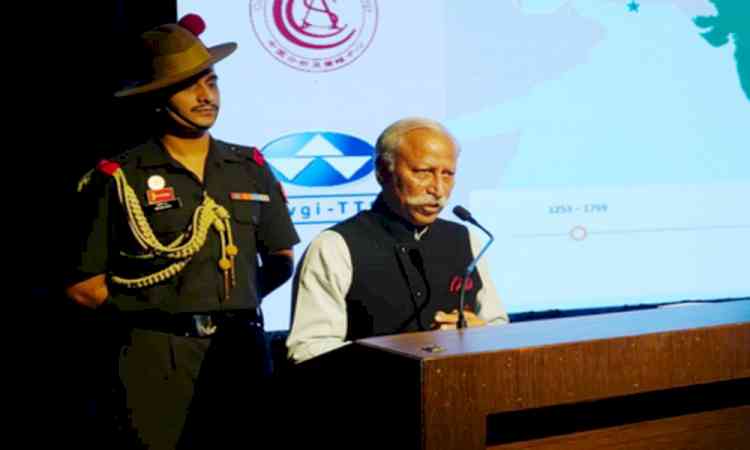
Itanagar, Sep 5 (IANS) Arunachal Pradesh Governor Lt Gen K.T. Parnaik (Retd) on Saturday cautioned that China’s contemporary strategic outlook continues to reflect expansionist tendencies, as evident from its territorial claims and assertive posturing along disputed borders.
Addressing the PIC-CCAS China Conference-2026 at the Pune International Centre (PIC), the Governor, referring to China’s claims over Arunachal Pradesh and areas in Ladakh, stressed that India must remain vigilant, united and prepared to safeguard its territorial integrity and national interests.
Drawing upon his extensive military and strategic experience, the Governor described China as India’s “civilisation neighbour”, a nation with which India shares centuries of cultural and historical interactions. Lt Gen Parnaik (Retd) highlighted the remarkable transformation of China under the leadership of the Chinese Communist Party, noting its rise as a major economic, technological, and military power.
He observed that China has systematically expanded its influence across Asia, Africa, and other regions through infrastructure investments, financial assistance, and initiatives such as the Belt and Road Initiative (BRI). While acknowledging the scale of China’s global outreach, the Governor stressed the need for countries in the region to carefully assess the strategic implications of such engagements.
Focusing on Arunachal Pradesh, he underlined the state’s immense strategic significance as India’s eastern frontier. He stated that the people residing in border areas are vital stakeholders in national security and their presence, local knowledge, resilience, and commitment to the nation contribute significantly to border management and situational awareness.
The Governor emphasised that empowered and prosperous border communities serve as the strongest guardians of the nation’s frontiers. He also highlighted the Government of India’s sustained efforts to strengthen infrastructure and connectivity in border regions through improved road networks, communication systems, and development initiatives.
Such measures, he noted, not only enhance operational preparedness but also improve the quality of life of border residents, thereby reinforcing the nation’s security architecture. Underscoring the importance of informed strategic discourse, the Governor said that understanding China’s evolving political, military, economic, and technological landscape is essential for shaping effective national policies.
He called for greater collaboration among policymakers, scholars, strategic thinkers, and security experts to build a comprehensive understanding of emerging geopolitical realities and ensure that India remains prepared to meet future challenges with confidence and clarity.
The conference featured insightful deliberations by eminent strategic thinkers and policymakers, including Jayadeva Ranade, President of CCAS; Dr Vijay Kelkar, Vice President of PIC; former Ambassador to Bhutan and China and former High Commissioner to Pakistan, Gautam Bambawale; and former Chief of Army Staff General Manoj Pande. Drawing upon their vast experience in diplomacy, governance, and national security, they shared valuable perspectives on China’s evolving role, regional security dynamics, and the emerging geopolitical challenges and opportunities for India.
The conference brought together leading scholars, policymakers, strategic analysts, and domain experts from across the country to deliberate on issues of profound national and regional significance.
The discussions focused on key themes such as India-China bilateral relations and border dynamics, evolving military and security developments, emerging trade and economic trends, rapid advancements in technology, innovation, and the digital domain, and the changing geopolitical and strategic landscape of Asia.
--IANS
sc/uk