Centre for Human Rights and Duties Concludes Orientation Programme for Freshers with Experiential Exposure Visit
The week-long Orientation Programme for Freshers 2026–27 at Centre for Human Rights and Duties (CHRD), Panjab University, Chandigarh, concluded today. The orientation programme was aimed at introducing newly admitted students to the academic, institutional and experiential dimensions of human rights education.
 City Air News
Sep 22, 2026 10:37
0
City Air News
Sep 22, 2026 10:37
0
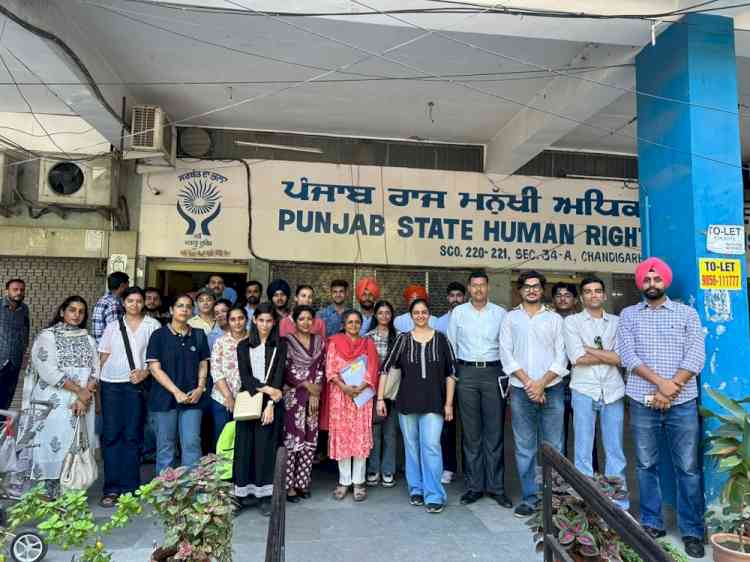
Chandigarh, September 22, 2026: The week-long Orientation Programme for Freshers 2026–27 at Centre for Human Rights and Duties (CHRD), Panjab University, Chandigarh, concluded today. The orientation programme was aimed at introducing newly admitted students to the academic, institutional and experiential dimensions of human rights education.
The Orientation Week comprised a series of special lectures and academic engagements focusing on contemporary human rights concerns and practical skills. The programme included sessions on Holistic Development of Students, Disability and Inclusion, Paralegal Skills for Human Rights Practice, Rights of Transgender Persons, and Mental Health and Well-Being. Students were also familiarised with the resources and facilities available at the AC Joshi Library through a dedicated library user orientation programme.
As part of the concluding phase of the Orientation Programme, the Centre organised an Exposure Visit on September 22, 2026, providing students with an opportunity for experiential learning through visits to significant institutional and heritage sites in Chandigarh.
The visit covered three important destinations—Pierre Jeanneret House Museum, Sector 5; Punjab State & Chandigarh (UT) Human Rights Commission, Sector 34; and the UNESCO World Heritage Site - Capitol Complex.
At the Pierre Jeanneret House Museum, students were introduced to Chandigarh's architectural heritage and the contribution of Pierre Jeanneret to the planning and development of the city. The visit enabled them to appreciate the cultural and historical dimensions of Chandigarh and its distinctive architectural legacy.
The students subsequently visited the Punjab State & Chandigarh (UT) Human Rights Commission, where they received an institutional briefing on the mandate and functioning of Human Rights Commissions and their role in the protection and promotion of human rights.
A significant highlight of the visit was the interaction with the Hon’ble Chairperson of the Punjab State and Chandigarh (UT) Human Rights Commission, Justice Sant Prakash ji, and Member (PSHRC), Jitender Singh Shunty (Padam Shree Awardee). The interaction provided students with an opportunity to gain first-hand insights into the functioning of the Commission, human rights practice and institutional mechanisms for protecting human rights. Students also engaged in an interactive question-and-answer session, enabling them to connect their academic understanding with the practical functioning of a statutory human rights institution.
The final segment of the visit took the students to the Capitol Complex, a UNESCO World Heritage Site, where they were introduced to the architectural and institutional significance of the High Court, Legislative Assembly, Secretariat and associated heritage sites, subject to access permissions. The visit offered students an opportunity to understand the interrelationship between architecture, democratic institutions, governance and public life.
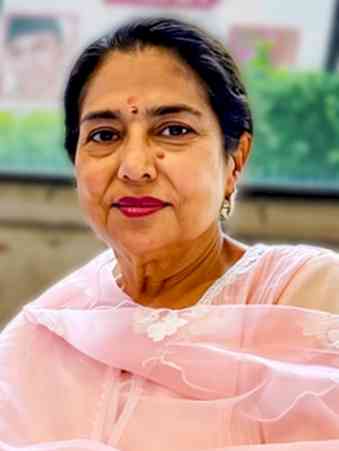
The programme was conceptualised and coordinated under the guidance of Dr. Upneet Kaur Mangat, Chairperson, Centre for Human Rights and Duties, Panjab University, Chandigarh, with an emphasis on providing freshers with meaningful academic, institutional and experiential exposure from the very beginning of their programme.