Canada's acknowledgment of Khalistani role in Kanishka bombing validates India's long-held stand
The Canadian Security Intelligence Service's (CSIS) acknowledgment that Canada-based Khalistani extremists were responsible for the 1985 Air India Flight 182 'Kanishka' bombing, which claimed all 329 lives on board, was far more than a symbolic admission, a report has stated.
 IANS
Jun 27, 2026 09:20
0
IANS
Jun 27, 2026 09:20
0
Ottawa, June 27 (IANS) The Canadian Security Intelligence Service's (CSIS) acknowledgment that Canada-based Khalistani extremists were responsible for the 1985 Air India Flight 182 'Kanishka' bombing, which claimed all 329 lives on board, was far more than a symbolic admission, a report has stated.
It marked a belated affirmation of India's longstanding position that the massacre was the outcome of a terrorist plot conceived and executed from Canadian soil by extremists pursuing a violent separatist agenda. More than four decades after the Air India Flight 182 bombing, Canada has finally acknowledged a truth India has consistently maintained since June 23, 1985, a report in ‘Khalsa Vox' detailed.
Marking the anniversary of the Air India Flight 182 Kanishka bombing this week, the Canadian Security Intelligence Service (CSIS) explicitly named Canada-based Khalistani extremists as those responsible for planting the bomb that killed all 329 people on board, including 268 Canadian citizens, many of Indian origin.
"On this National Day of Remembrance for Victims of Terrorism, CSIS remembers the 329 people on Air India Flight 182 who lost their lives due to a heinous act of terror. On June 23, 1985, a bomb planted by Canada-based Khalistani extremists destroyed the aircraft, killing everyone on board—most of them Canadians. It remains the deadliest terrorist attack in Canada's history and a defining moment for our national security community," read a statement issued by the CSIS.
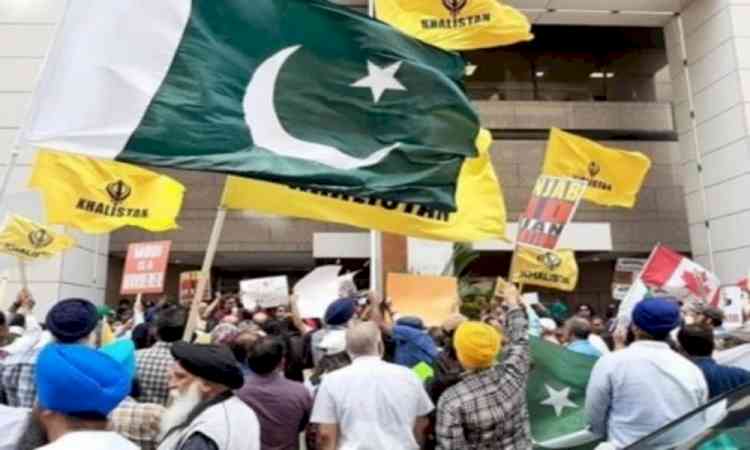
According to the Khalsa Vox report, successive Canadian governments permitted the Khalistani extremist groups to operate with relative impunity under the pretext of free speech and multiculturalism.
"Funding flowed, rallies glorified extremists, and intelligence lapses — documented in the Major Commission inquiry — enabled the plot. CSIS itself faced criticism for surveillance failures and evidence mishandling. The victims' families waited in vain for full accountability as perpetrators like Talwinder Singh Parmar evaded justice for years," it mentioned.
"The timing of this admission is telling. It comes amid heightened scrutiny of Khalistani networks in Canada, which continue to threaten not just India-Canada relations but Canada's own security," it further stated.
The report cited findings from Canadian intelligence, which have increasingly flagged these groups as "national security threats" for diverting community funds and exploiting democratic institutions to further extremist objectives. It argued that political expediency, particularly efforts to court diaspora votes, has often outweighed decisive action. This "selective tolerance" has strained bilateral relations between India and Canada, hindered extradition efforts, and enabled fringe elements to shape the narrative around Punjab and Sikh identity.
The report underscored India's consistent cooperation with Canada on counter-terrorism through intelligence sharing and efforts to secure justice for its citizens and diaspora victims.
Highlighting that "denial and deflection" dominated Canada's response for years, the report said, "The Kanishka bombing was an attack on a civilian aircraft carrying mostly Canadians; it should have unified both nations against extremism. Instead, denial and deflection became default responses for too long. True reconciliation demands more than a press statement. It requires dismantling support networks, prosecuting remaining suspects, freezing assets, and rejecting the glorification of terrorists in public spaces."
--IANS
scor/as