BioAgri 2025 — India’s largest conference on sustainable Biological Agriculture begins in Hyderabad, organised by BIPA—the world’s oldest trade body for Agricultural Biology.
“India urgently needs a Soil Health Policy” – Dr Sagar Hanuman Singh, DG, NIPHM
 City Air News
Dec 10, 2025 09:56
0
City Air News
Dec 10, 2025 09:56
0
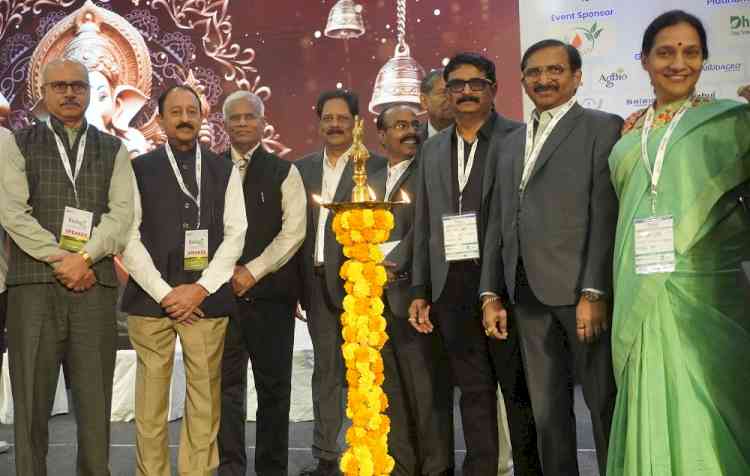
Hyderabad, December 10, 2025: India’s ₹50,000-crore basmati export story is running into a silent yet serious hurdle—pesticide residues—warned experts at BioAgri 2025, the country’s largest Bio-Agri Input Professionals Conference that opened today at Ramoji Film City.
Delegates pointed out that key import destinations—including the European Union, Japan and Iran—are insisting on “clean rice” with near-zero pesticide residues. The EU has already reduced maximum residue limits (MRLs) for fungicides like tricyclazole to 0.01 ppm—literally 1 gram in 100 tonnes—making compliance a make-or-break for Indian exporters.
EU rejections of Indian rice have risen sharply—from 3 alerts in 2020 to 37 in 2024—even as India’s rice exports to the EU grew over 100% between 2019 and 2023, increasing both market opportunity and export risk.
Experts said the demand is not only international. India’s 300–400 million middle-class consumers are now asking for residue-free food that remains affordable—putting scientific biological inputs at the centre of the next agricultural transition.
Inaugurating the conference, Dr Sagar Hanuman Singh, Director-General, National Institute of Plant Health Management (NIPHM), a premier body under the Ministry of Agriculture, underlined the need for a formal national soil-health framework, comparable to soil-health policies in Europe and the US.
“Chemical agriculture has done enormous damage to soil. Plant health and human health cannot be separated. We now need soil-health policy, guidelines and rejuvenation programmes at a national scale,” he said.
He added that pesticide overuse is making several crops—including Telangana’s chillies—unacceptable for export, and urged immediate action to ensure India’s produce remains residue-safe and export-ready.
“Biological agriculture is not an alternative—it is essential”, said Prof M S Reddy. Delivering the Keynote, Prof M S Reddy, a globally recognised expert in sustainable agriculture (USA) said, “Two decades ago, when biological agriculture lacked legitimacy, BIPA built the ecosystem. Today, biologicals are not optional tools—they are foundational pathways for soil regeneration, public health and farmer prosperity.”
He added that fatigued soils, water stress, climate volatility and rising residue intolerance now make a biological shift in Indian agriculture inevitable.
“Healthier soils mean healthier cities”, — Dr Bakul Joshi said, and reminded that soil health is ultimately public health. “Parks are empty, and hospitals are full. We need to shift from chemical-dependent agriculture to integrated, biological crop management.”
V. Praveen Rao, Vice-Chancellor, Kaveri University and former VC, Professor Jayashankar Telangana State Agricultural University (PJTSAU), a state-run University, stressed that collaboration between public institutions and the biological industry must now become central to agricultural transition.
Dr John Peter, President, BIPA, said biological agriculture is not new to India. We practised biological agriculture eight decades ago. Then came the chemical phase. We now need to reverse the trend and reclaim our biological heritage.”
Bio Agri 2025 is being organised by BIPA, the world’s oldest trade body for Agricultural Biology—older than BPIA - Biological Products Industry Alliance of the USA and IBMA - International Biocontrol Manufacturers Association - Europe. “We are exploring overseas expansion beginning with Sri Lanka and have signed an MoU with Kaveri Agri University for skill development,” informed Dr Venkatesh Devanur, Secretary-General, BIPA.
BIPA represents over 100 industry members, supporting innovation, regulation, quality frameworks and policy advocacy in biological agriculture. Its vision is to position India as a global leader in biological inputs, powered by science and sustainability.
BioAgri 2025, now in its 5th edition, is organised by BIPA—the world’s oldest trade body for agricultural biology. The conference, themed “Nurturing Nature, Nourishing the Future,” brings together more than 200 delegates and features over 40 exhibition stalls showcasing cutting-edge biological technologies. The two-day event includes sessions and discussions on biologicals, biotechnology innovations, climate resilience, regulatory developments and emerging market trends in sustainable agriculture.
Dr Linga Srinivasa Rao, CMD, Srikar Biotech (Eldorado Agritech), informed that the company is preparing for a ₹1,000-crore IPO, and said preliminary filings have already been submitted to SEBI.