Bihar teacher rationalisation: 5.8 lakh teachers to benefit; transfers to be based on choice
Bihar Education Minister Mithilesh Tiwari said on Friday that the state's new teacher transfer and rationalisation exercise would be conducted entirely on the basis of teachers' preferences.
 IANS
Jul 31, 2026 09:39
0
IANS
Jul 31, 2026 09:39
0
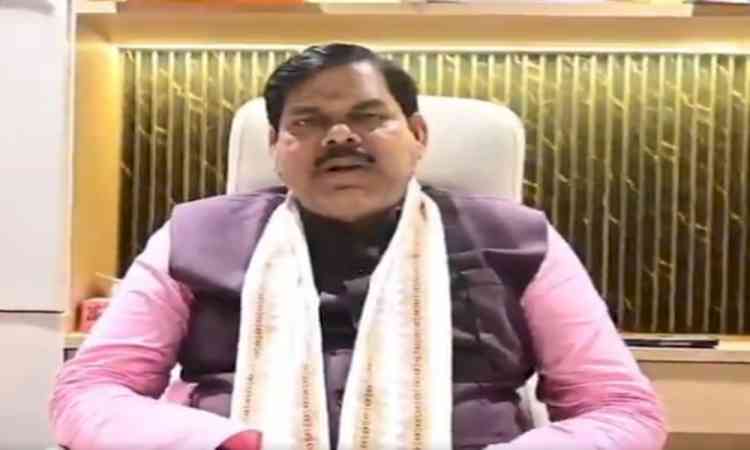
Patna, July 31 (IANS) Bihar Education Minister Mithilesh Tiwari said on Friday that the state's new teacher transfer and rationalisation exercise would be conducted entirely on the basis of teachers' preferences.
He clarified that no teacher would be transferred to a school outside the options submitted through the online portal.
The new system is expected to benefit around 5.80 lakh teachers across Bihar, while the state government plans to introduce a regular transfer cycle every five years in the future.
The online application portal opened on July 29.
During the first two days, 14,796 surplus teachers submitted their applications, while another 7,795 teachers filled out their forms but saved them without final submission.
Therefore, 22,591 teachers had participated in the process within the first two days.
In addition, 2,142 teachers applied for mutual transfers.
The Minister clarified that mutual transfer would be permitted only between teachers belonging to the same category.
Teachers must also belong to the same subject and class group.
Regular teachers can mutually transfer with regular teachers, school teachers with school teachers, and Vishishth category teachers with other teachers in the same category.
Minister Mithilesh Tiwari said only teachers who apply through the portal would be considered for adjustment, and no teacher would be transferred against their will.
Teachers can select a minimum of one and a maximum of 30 schools.
The department will make adjustments only among the schools selected by the teachers.
The Minister added that the exercise was necessary because some schools have an excess number of teachers while others face serious shortages.
Departmental data indicates that Bihar currently has 1,06,788 surplus teachers, including around 65,413 teachers in Classes 1–5, 16,400 teachers in Classes 9–10, and 14,500 teachers in Classes 11–12.
The objective is to redistribute teachers more evenly, particularly to schools with high student enrolment but inadequate teaching staff.
Given the surplus of primary-level teachers, the Education Department is also planning to introduce Bal Vatika or early-childhood education centres in primary schools in line with the New Education Policy.
Minister Mithilesh Tiwari said that around 10,000 primary schools have Anganwadi centres, and surplus teachers could also be utilised to teach children enrolled there.
According to Minister Tiwari, the state government's benchmark is one teacher for every 30 students.
Districts such as Araria, Jamui and Purnea currently face shortages at the primary level and have therefore been included among the school choices available through the portal.
The transfer policy also provides different arrangements for male and female teachers.
Female teachers will receive priority for schools in panchayats adjoining their current panchayats.
Male teachers, meanwhile, will be able to select schools within four blocks surrounding their residential block.
The Minister said these provisions have been designed while keeping family and social circumstances in mind.
A major change in the policy will be the introduction of regular teacher transfers every five years.
The Education Department intends to move away from the earlier practice under which teachers could remain posted at the same school for decades.
Minister Mithilesh Tiwari said that periodic transfers would bring a fresh environment to schools, expose teachers to new students and working conditions, and encourage healthy competition.
"Even the government changes every five years. In this context, if teachers move to a new school after five years, the children will get new teachers, and the teachers will have the opportunity to work in a new environment."
The Minister also responded sharply to teachers opposing transfers after having spent 25–27 years at the same school, questioning whether a school could be treated as if it were personally owned by an employee.
He emphasised that teachers, like other government employees, are required to follow service rules and that the new system is intended primarily to correct the uneven distribution of teachers across Bihar's schools.
--IANS
ajk/khz