Any country can't have veto in how India develops relations with others: EAM Jaishankar
Russian President Vladimir Putin’s just-concluded trip to India for a bilateral summit underscored New Delhi’s commitment to strategic autonomy and its freedom of choice in foreign policy, External Affairs Minister (EAM) S. Jaishankar said on Saturday. His remarks came in the backdrop of US pressure on India to scale back purchases of Russian oil and defence equipment.
 IANS
Dec 6, 2025 10:51
0
IANS
Dec 6, 2025 10:51
0
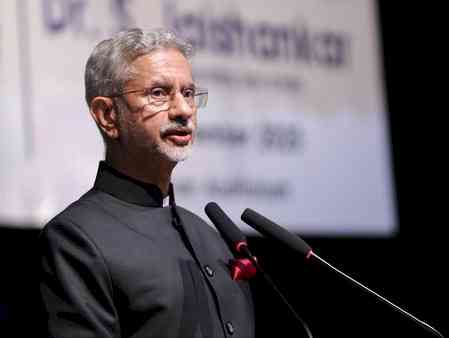
New Delhi, Dec 6 (IANS) Russian President Vladimir Putin’s just-concluded trip to India for a bilateral summit underscored New Delhi’s commitment to strategic autonomy and its freedom of choice in foreign policy, External Affairs Minister (EAM) S. Jaishankar said on Saturday. His remarks came in the backdrop of US pressure on India to scale back purchases of Russian oil and defence equipment.
Speaking at the Hindustan Times Leadership Summit in New Delhi, EAM Jaishankar stressed the importance of keeping India’s key relationships “in good place” as the country rises on the global stage.
Responding to questions about Putin’s visit and the trajectory of Indo-Russian ties, he explained that India’s foreign policy is built on broad cooperation with multiple partners, ensuring flexibility and independence in its engagements.
“For a country like us — big, rising, and expected to occupy a more important place — it is important our key relationships are in good place. We maintain good cooperation with as many players as possible, and that is what foreign policy is about,” he said.
Jaishankar highlighted concrete outcomes from Putin’s visit, including a mobility agreement, a joint venture on fertilisers, and renewed efforts to strengthen bilateral cooperation. These, he suggested, marked steps toward expanding ties beyond traditional areas.
Asked whether closer engagement with Moscow might complicate India’s ongoing trade negotiations with Washington, Jaishankar dismissed the concern.
“I disagree. Everybody knows that India has relations with all the major countries of the world. For any country to expect to have a veto or a say in how we develop our relations with others is not a reasonable proposition,” he asserted, adding that India values multiple relationships and retains the freedom to pursue them.
Reflecting on the evolution of India’s partnerships, Jaishankar noted that ties often grow unevenly. With the United States, economic relations flourished in the 1980s and 1990s, while defence cooperation only advanced after the civil nuclear deal. In Europe, India enjoys substantive economic and political ties, though not always extending into defence and security.
On Russia, he observed that both sides historically looked to the West and China as primary economic partners, shaping the trajectory of their engagement. Yet, he suggested, the present moment offers opportunities to recalibrate and broaden cooperation. By situating Putin’s visit within India’s wider diplomatic framework, Jaishankar projected New Delhi’s foreign policy as pragmatic, multi-aligned, and firmly anchored in strategic autonomy.
--IANS
sktr/as