2025: Indian sport’s inflection moment
2025 emerged as an inflection year for Indian sport - a period defined not just by international medals (an essential ingredient to build morale), but equally by the welcome signs of a systemic overhaul in the nation's approach to sport. Increased government and private investments, policy reforms, and expanded infrastructure have been started and need to be taken forward to create the foundation upon which Indian sporting excellence can be built.
 City Air News
Dec 31, 2025 05:20
0
City Air News
Dec 31, 2025 05:20
0
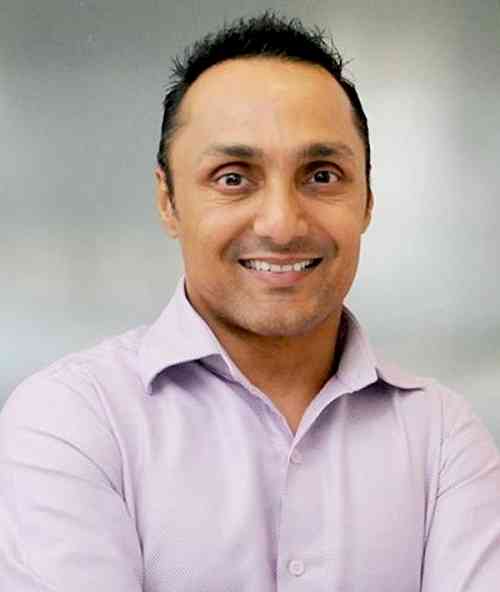
By Rahul Bose
2025 emerged as an inflection year for Indian sport - a period defined not just by international medals (an essential ingredient to build morale), but equally by the welcome signs of a systemic overhaul in the nation's approach to sport. Increased government and private investments, policy reforms, and expanded infrastructure have been started and need to be taken forward to create the foundation upon which Indian sporting excellence can be built.
This year the government approved the National Sports Policy (NSP) 2025. This policy lays out a long-term vision geared to consistent international performance (India is already hosting the Commonwealth Games, 2030, and has stated its ambition to host the 2036 Olympic Games). Consequently, we saw the enactment of the National Sports Governance Act, 2025. The Act fundamentally changes how Indian sport is run by replacing discretion with transparency and structure. A reading of it reveals the intent to focus on the athlete, with selection processes, funding decisions, and grievance redressal governed by clearly defined rules, criteria, and timelines. It moves towards reducing arbitrariness and build trust among athletes, especially those from smaller towns and less-connected backgrounds.
For me what’s noteworthy is that for the first time under this act, sports bodies are required to adopt a Safe Sports Policy safeguarding women, minor athletes and other vulnerable persons, alongside a Code of Ethics aligned with international norms. Independent oversight through a National Sports Board and a dedicated Sports Tribunal bring stability and continuity, while mandatory athlete representation and women’s participation in decision-making bodies rebalances power within federations. Together, these changes are creating the fairness, credibility, and long-term certainty required for sustained international competitiveness.
Prime Minister Modi has shown personal interest in India’s sportspersons by hosting athletes and teams at his residence for interactions that go beyond formal felicitations. One reads conversations about athletes’ journeys, their struggles, sacrifices, and breakthroughs.
I’ve been following, with great interest, our progress in various sporting disciplines. Just this month, Joshna Chinappa, Abhay Singh, and Anahat Singh combined to script history as India lifted its first-ever Squash World Cup title with a commanding 3-0 victory over Hong Kong.
Indian women led the charge on the global stage. In November 2025, the Indian Women’s Cricket Team clinched the ICC Women’s World Cup, while the Indian Women’s Blind Cricket Team scripted history by winning their first-ever T20 World Cup.
In boxing, India concluded their debut campaign at the World Boxing Cup Finals 2025 with a haul of nine gold medals . At the Asian Youth Games 2025, India delivered its best-ever performance.
The Indian Men’s Hockey Team won the Asia Cup 2025 in Rajgir, Bihar, ending an eight-year wait for continental supremacy by defeating South Korea 4-1 in the final.
Eighteen-year-old Sheetal Devi became a world champion in para-archery , Divya Deshmukh became the first Indian woman to win the FIDE Women’s World Cup title after defeating fellow Indian Koneru Humpy .
The triumphs of Indian sport in 2025 have been refreshingly decentralized, reaching all corners of the country. Recently, the FIH Men’s Junior Hockey World Cup took place in Tamil Nadu, and the World Boxing Cup Finals, in Greater Noida. The newly constructed and world class Veer Savarkar Sports Complex in Ahmedabad, hosted the 11th Asian Aquatics Championship.
In rugby itself, Rajgir, Bihar, hosted the Asia Rugby Emirates U20 Sevens, with the Indian Women’s team clinching bronze in a highly competitive field. As Asia Rugby President Qais Al Dhalai observed, bringing elite youth rugby to Bihar “is not only a celebration of youth rugby, but also a powerful testament to the sport’s growth … across every corner of Asia”.
In many ways, rugby’s own progress mirrors India’s larger sporting revolution. In June 2025, Mumbai witnessed the inaugural Rugby Premier League (RPL) – one of the world’s first franchise-based Rugby Sevens leagues. Six city teams (Chennai Bulls, Hyderabad Heroes, Mumbai Dreamers, etc.) mixed local stars with over 30 foreign players from rugby powerhouses like New Zealand, South Africa, Fiji, and Australia. The league’s first match on June 15th drew curious, enthusiastic crowds at the Andheri Sports Complex, Mumbai, with live broadcasts on television and OTT platforms. This high-profile launch was complete with innovative four-quarter games that not only thrilled a new generation of fans but also convinced sponsors and broadcasters that rugby can be part of India’s commercial sports landscape. It is a sign of how far the game has come that, just a month later, India hosted a continental rugby championship in a place like Rajgir.
The Union sports ministry has outlined an ambitious initiative to establish multi-city, franchise-based leagues across diverse sports disciplines under the Khelo India framework. I can personally vouch that the ASMITA women’s rugby league has given a fillip to the sport amongst young women across cities in the country. Meanwhile private sector response has been gradually growing : broadcasters securing OTT rights and sponsors recognizing genuine commercial viability in Indian sports.
This year, the Ministry of Youth Affairs & Sports overhauled the Scheme of Assistance to National Sports Federations, laying out clear conditions for federations (including ours) to qualify for funding. For example, any federation with an annual budget over ₹10 crore must now appoint a full-time High-Performance Director (HPD) to oversee technical programs. Every sport must devote at least 20% of its budget to grassroots development (junior and youth training) and at least 10% to coach and staff training. Probable international-level athletes are provided a ₹10,000 monthly diet allowance during non-camp days – an important stipend to ensure no player skips a meal while chasing Olympic dreams.
Meanwhile, the Fit India movement led by the “Sundays on Cycle" initiative (two editions of which I took part in) - a nationwide weekly movement championed by the Union Sports Minister, is a welcome step towards establishing physical fitness, amongst Indians. I have said before and I will say it again: sport and fitness must become a way of life in society. Only then can true, lasting change emerge. We must build a genuine , human ecosystem of sport. While gold medals are a lightning rod of sport for a country, a universal, accessible sporting culture is the true, lasting hallmark of a sport-forward nation.
In a nutshell:
- The five pillars of the National Sports Policy give each sport a chance to play a part in nation building - through performance but also mass participation, social and economic impact and integration with education
- The National Sports Governance Act brings regulatory capacity in an unprecedented manner and encourages federations to establish and strengthen governance across the pyramid
- It creates an opportunity for public-spirited leaders to play their role
- Athlete performances and active participation from national and state actors encourage all stakeholders - from federations to sponsors - to enlarge their vision and ambitions
- Addressing safe sport and matters like age fraud are critical to the growth of sports like rugby
- Securing hosting rights to the CWG 2030 and other international events across sports gives both athletes and spectators opportunities to experience world class sport across disciplines
This government has set the target for India to be among the top 10 sporting nations in the next decade. The foundations are now firmly in place. The challenge ahead is not to rethink the direction, but to maintain consistency, discipline, and momentum. It’s an exciting moment for India, for Indian sport and for society as a whole. Onward and upward!
The Author is President, Rugby India and former international Rugby player.
(Views are personal)